Wholesale Bulk Almonds: The Complete Commercial Buyer's Guide (2026)
Procuring wholesale bulk almonds on global agricultural commodity markets requires far more than comparing spot price quotes. Industrial food manufacturers, confectioners, snack brands, and overseas importers must navigate complex USDA grade specifications, kernel counts per ounce, free fatty acid thresholds, pasteurization protocols, and ocean freight logistics. This complete 2026 guide provides professional procurement teams with actionable frameworks to secure consistent, premium-grade wholesale bulk almonds while hedging against seasonal price volatility.
Why Wholesale Bulk Almonds Demand Strict USDA Sizing & Grade Verification
When evaluating wholesale bulk almonds, understanding official United States Department of Agriculture (USDA AMS grading standards) is the first line of defense against product variability, processing downtime, and customer complaints. California produces over 80% of the world's commercial almond crop, governed by precise marketing order tolerances.
U.S. Fancy: The strictest commercial tier. It permits a maximum of only 5% chipped or scratched kernels, 1% foreign material, and virtually zero doubles or insect damage. Food manufacturers utilize U.S. Fancy whole kernels for luxury snacking tins, gift packs, and artisan confectionery where visual perfection is essential.
U.S. Extra No. 1: The global manufacturing workhorse. Allowing up to 5% chips/scratches, 1% split kernels, and 1% internal defects, this grade balances aesthetic appeal with exceptional cost efficiency. It serves as the primary choice for chocolate inclusions, bakery toppings, and retail trail mixes.
Explore our complete whole almonds product portfolio to compare grade specifications across all major California varieties.
U.S. No. 1 Supreme & Select Sheller Run: Engineered for secondary industrial processing. If your facility mills almond flour or blends smooth almond paste, minor external surface chips do not affect product yield or flavor chemistry.
Count Per Ounce (CPO) Calibration: Kernel sizing directly governs portion control and line filling speeds. Common commercial calibrations include 18/20 (jumbo), 20/22 (extra large), 23/25 (large), 27/30 (medium), and 30/32 to 36/40 (small). Standardizing CPO guarantees consistent piece weight across automated food production lines.
Wholesale Bulk Almonds Contract Models: Spot Purchases vs Forward Booking
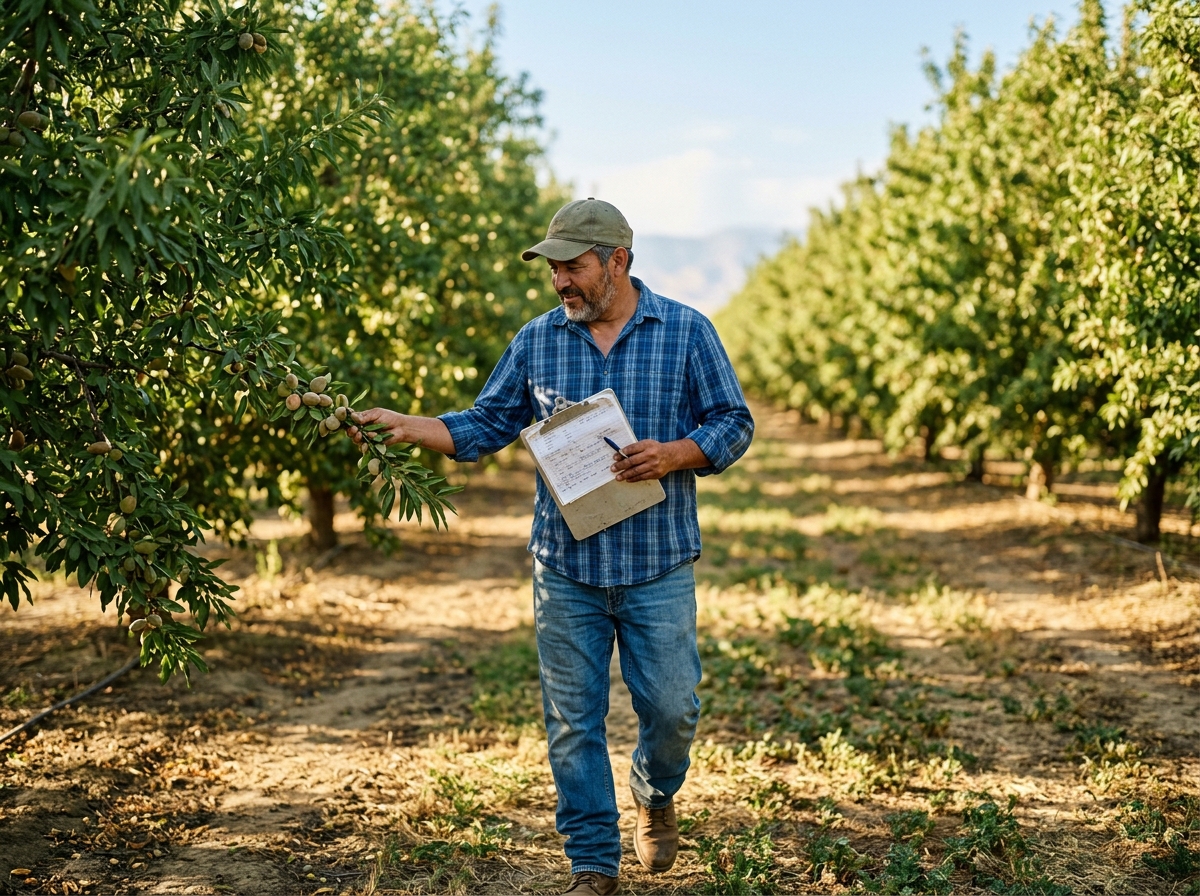
Pricing on commercial almond consignments is influenced by winter snowpack, spring bloom weather, subjective May crop forecasts, objective July estimates by the USDA NASS, and final autumn harvest yields. To protect margins, high-volume procurement teams rely on structured procurement strategies rather than unhedged open-market buying.
Forward Supply Contracts (60%–75% of Annual Volume): Locking in forward contracts between June and August ahead of harvest secures volume commitments, insulates your business from supply shortages, and locks in your Cost of Goods Sold (COGS). Reliable processors like Pacific Almonds back forward commitments with dedicated orchard acreage.
Spot Orders (25%–40% of Volume): Holding a strategic reserve of demand allows buyers to capture seasonal price dips during Q1 and Q2 when packers optimize warehouse storage prior to the new crop. Learn more about market trends in our guide to California almonds export market dynamics.
Commercial Incoterms 2020: International contracts trade primarily under FOB Oakland/Long Beach (where the buyer books vessel space) or CIF/CFR Destination Port (where the seller manages maritime freight and marine transit insurance). Review our comprehensive breakdown of ocean freight logistics and Incoterms.
Defect Tolerances, Independent Inspection & Full Lot Traceability
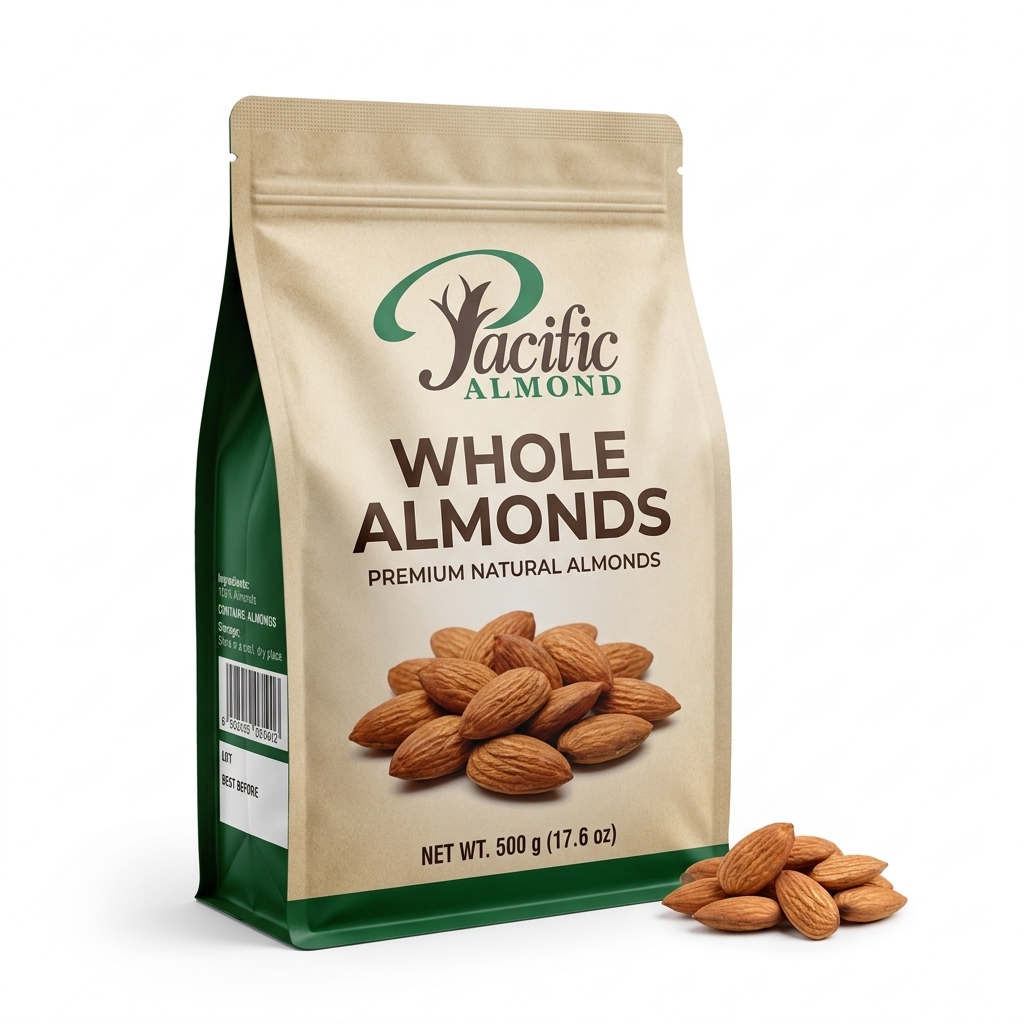
Every container of California almonds dispatched by Pacific Almonds is backed by an independent third-party Certificate of Analysis (CoA) validating moisture content, peroxide value, free fatty acids, and microbiological clearance.
Tested in ISO 17025 accredited laboratories prior to shipping container sealing.
Chemical Stability & Shelf Life: Moisture, FFA & Pasteurization
Physical grading represents only part of the procurement equation. For commercial nut shipments, chemical stability determines shelf life, roast flavor development, and sensory quality over extended storage:
Moisture Control (4.0%–6.0%): Maintaining water activity below 0.60 aw is vital. Excess moisture (>6.5%) accelerates enzymatic lipid oxidation, mold sporulation, and hydrolytic rancidity. Conversely, moisture below 3.5% leads to fragile kernels prone to breakage during cutting and transport.
Free Fatty Acids (FFA) & Peroxide Value (PV): Fresh harvest almonds consistently measure FFA under 0.5% and Peroxide Value under 1.0 meq/kg. Any shipment displaying FFA above 1.5% or PV above 5.0 meq/kg indicates advanced oxidative breakdown.
Mandated 4-Log Pasteurization: Under USDA federal marketing orders overseen by the Almond Board of California, commercial almonds distributed in North America must receive a verified 4-log Salmonella reduction. Steam pasteurization delivers microbiological safety without chemical residue, making it ideal for organic buyers and strict European Union standards.
Export Packaging Standards & Container Load Logistics
Proper packaging protects bulk California nuts against ambient humidity, temperature swings, and cargo sweat during transoceanic shipping. Depending on handling capabilities, commercial buyers can select from three packaging formats:
25-lb and 50-lb Corrugated Cartons: Heavy-duty, poly-lined fiberboard cartons are the industry standard for manual handling, food service, and wholesale distributors. A 20ft ocean container accommodates approximately 1,600 of the 25-lb cartons (40,000 lbs net).
2,200-lb (1 MT) Industrial Super Sacks: Heavy woven polypropylene bulk bags equipped with top duffle spouts and bottom discharge chutes. Designed for high-speed manufacturing plants with automated hopper intake systems.
Transit Moisture Protection: For ocean shipments passing through tropical routes, container desiccant blankets and vapor-barrier liners prevent condensation ("container rain") from damaging almond skins. Learn more about sustainable cultivation practices in our overview of sustainable California almond farming.
USDA Almond Grade Tolerances & Specifications Matrix
Allowable defect percentages by commercial grade under official USDA marketing order regulations.
Hermetically maintained water activity (aw < 0.60) prevents mold sporulation and enzyme-catalyzed rancidity.
Validated steam or PPO processes guarantee consumer safety without altering delicate natural kernel flavor.
Every container load accompanied by accredited lot microbiology, aflatoxin screen, and sizing verification.
Supplied in 25lb / 50lb poly-lined corrugated cartons, or 2,200lb breathable industrial bulk super sacks.
Official USDA Almond Grade Tolerance Matrix (% by weight)
Reference chart for commercial contract negotiations and quality control receiving teams.
| USDA Commercial Grade | Dissimilar / Bitter (%) | Doubles (%) | Chip & Scratch (%) | Foreign Material (%) | Total Internal Defects (%) |
|---|---|---|---|---|---|
| U.S. Fancy | 5.0% | 3.0% | 5.0% | 0.05% | 1.5% |
| U.S. Extra No. 1 | 5.0% | 5.0% | 5.0% | 0.05% | 2.0% |
| U.S. No. 1 (Supreme) | 5.0% | 15.0% | 10.0% | 0.10% | 3.0% |
| U.S. Select Sheller Run | 5.0% | 15.0% | 15.0% | 0.10% | 4.0% |
| U.S. Standard Sheller Run | 5.0% | 20.0% | 20.0% | 0.20% | 5.0% |
Request Wholesale Bulk Contract Quotation
Submit your desired variety, count-per-ounce, packaging format, and monthly delivery schedule. Receive a firm commercial quote within 24 hours.
Buyer Checklist Essentials
Frequently Asked Questions: Commercial Almond Procurement
Common inquiries from corporate procurement officers, food manufacturers, and international importers.
What is the minimum order quantity (MOQ) for wholesale bulk almonds?
The standard export minimum order quantity for wholesale bulk almonds is one Full Container Load (FCL), which equates to approximately 40,000 to 44,000 lbs (18 to 20 metric tonnes) in a 20-foot or 40-foot ocean shipping container. For domestic North American buyers, less-than-truckload (LTL) shipments starting at 5 to 10 standard pallets are also available upon contract arrangement.
How do USDA almond grades differ between U.S. Fancy and U.S. Extra No. 1?
U.S. Fancy is the strictest grade, permitting a maximum of 5% chipped/scratched kernels and less than 1.5% internal defects, designed for premium retail snack packs. U.S. Extra No. 1 allows up to 5% chips and scratches with up to 1% split or broken kernels, representing the most popular, cost-effective grade for chocolate manufacturing, roasting, and cereal inclusions.
Which Incoterms are recommended for bulk almond export contracts?
Most international shipments trade under FOB (Free on Board) Port of Oakland or Long Beach, giving the buyer direct control over ocean vessel booking and demurrage terms. Alternatively, CIF (Cost, Insurance, and Freight) or CFR (Cost and Freight) terms allow the seller to manage maritime shipping to your port of entry, such as Rotterdam, Dubai, Mumbai, or Yokohama.
What pasteurization methods are compliant for commercial nut shipments?
Under USDA regulations, almonds shipped within North America require a validated 4-log Salmonella reduction. The two primary methods are continuous moist steam pasteurization (which is chemical-free and certified for organic and European markets) and Propylene Oxide (PPO) treatment. Pacific Almonds offers steam-pasteurized lots compliant with global organic and non-GMO standards.
What packaging options are offered for container orders?
We supply California almonds in 25-lb and 50-lb poly-lined corrugated cartons stacked on fumigated heat-treated ISPM-15 wooden pallets, as well as 2,200-lb (1 metric tonne) industrial super sacks designed for automated manufacturing hopper loading.