Sustainable Almond Farming California Practices
At Pacific Almonds, every decision we make in the orchard is guided by one question. Will this still make sense in 25 years?
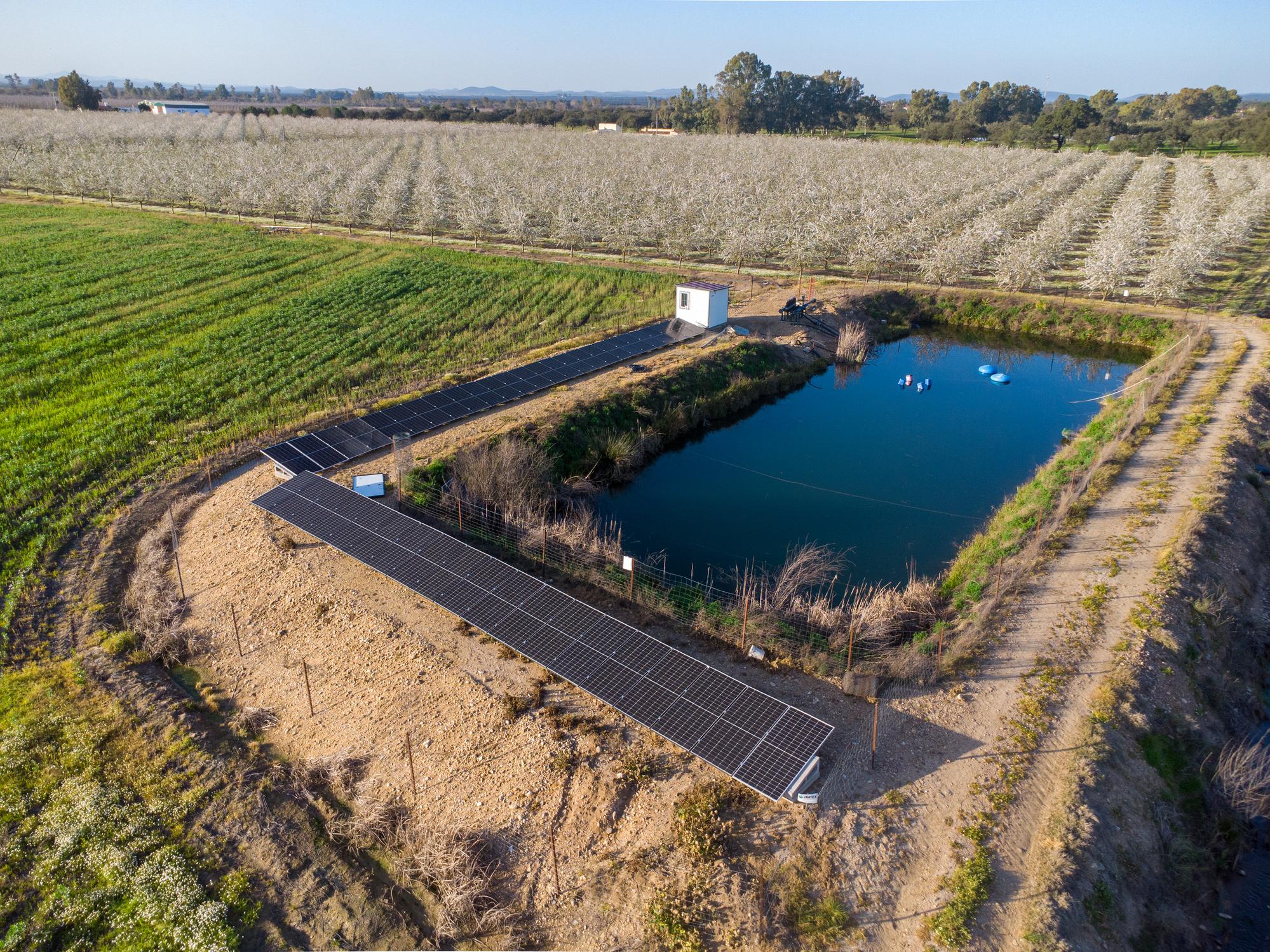
As dedicated practitioners of sustainable almond farming California methods based in Lost Hills, Pacific Almonds balances generational agricultural productivity with rigorous natural resource stewardship. California's Central Valley yields over 80% of global almonds, and our family orchards operate advanced micro-drip irrigation systems, cover cropping, and whole-orchard recycling in strict alignment with the Almond Board of California Sustainability Program.
Sustainable Almond Cultivation, Water Efficiency & SGMA Compliance
Pacific Almonds implements certified sustainable almond farming practices across our Lost Hills Central Valley orchards in compliance with California's Sustainable Groundwater Management Act (SGMA). We utilize 100% telemetry-controlled precision micro-irrigation, reducing water consumption per pound by over 33% relative to historic baselines. Orchard sustainability protocols include zero-waste whole-orchard biomass recycling (sequestering ~2.4 metric tons of carbon per acre), 100% repurposing of almond hulls and shells into dairy nutrition, and certified Bee Friendly Farming pollinator corridors.
Pacific Almonds Environmental & Agricultural Benchmarks
| Water Management & SGMA | 100% precision micro-drip irrigation • Real-time soil moisture capacitance sensors • Local GSA compliance |
|---|---|
| Water Efficiency Metric | 33%+ reduction in water per pound harvested vs. 1990 baseline (Almond Board of California target) |
| Zero-Waste Co-Products | 100% of almond hulls upcycled for California dairy cattle nutrition • Shells repurposed for clean bedding & bioenergy |
| Soil Carbon & Biomass | Whole Orchard Recycling (WOR) incorporating 100% woody biomass, sequestering ~2.4 MT of carbon per acre |
| Pollinator Health | Certified Bee Friendly Farming (BFF) • Native mustard and clover cover crop bloom corridors |
| Food Safety Pasteurization | TERP-validated organic steam pasteurization (chemical-free Log-5 reduction, 100% PPO-free) |
As food manufacturers and international buyers seek verifiable supply chain ESG metrics, we provide comprehensive third-party audit documentation, CASP field verification, and Pollinator Partnership Bee Friendly Certification to prove that California almonds can be grown responsibly and sustainably for decades to come.
Water Efficiency in Sustainable Almond Farming California
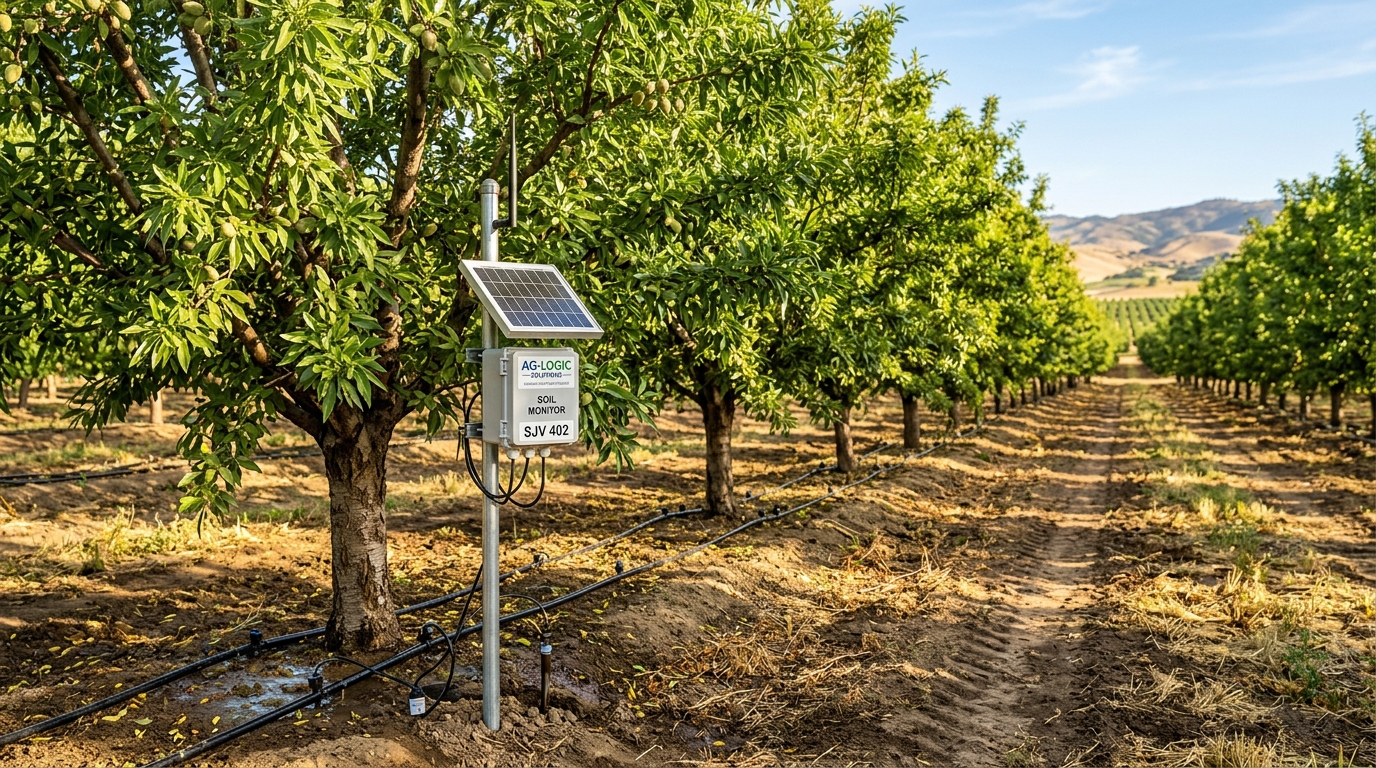
Water is California's most critical agricultural resource, and almond farming has a responsibility to use it wisely. Since the 1990s, California almond growers have reduced the amount of water used to grow each pound of almonds by 33%. This is a direct result of widespread adoption of precision drip and micro-irrigation systems. At Pacific Almonds, over 90% of our orchard acreage is irrigated using these highly efficient systems, which deliver water directly to the root zone, minimising evaporation and runoff.
We work with agronomists to monitor soil moisture levels in real time across every orchard block, adjusting irrigation schedules based on evapotranspiration data, weather forecasting, and root-zone sensors. This precision approach means we apply exactly the water our trees need. The result is a healthier orchard, a better-tasting kernel, and a meaningfully lower environmental footprint per pound of almonds produced.
California's Almond Board has set a target of reducing water use a further 20% by 2025. Pacific Almonds is on track to meet and exceed that target across our own orchards.
Learn More
Nothing We Grow
Goes to Waste.
An almond is a drupe. It grows inside a hull, inside a shell, on a tree that lives for 25 years. Every one of those layers, and the tree itself at the end of its productive life, has value. At Pacific Almonds, we operate on a zero-waste principle that turns every byproduct of our orchard into a resource.
Almond hulls, the soft outer casing, are one of California's largest livestock feed sources, rich in digestible energy for dairy and beef cattle. Shells, the hard inner casing surrounding the kernel, are used as livestock bedding, sold as a soil amendment, and increasingly burned as biomass for renewable energy generation. Together, hulls and shells offset a significant portion of the carbon footprint associated with growing the crop.
At the end of an orchard's 25-year productive life, we use Whole Orchard Recycling. The trees are mechanically pushed over, chipped, and incorporated back into the soil. This process sequesters carbon, improves soil water-holding capacity, reduces the need for synthetic inputs, and feeds the next generation of trees from the nutrients of the last. It is agriculture working in the way nature intended.
Learn More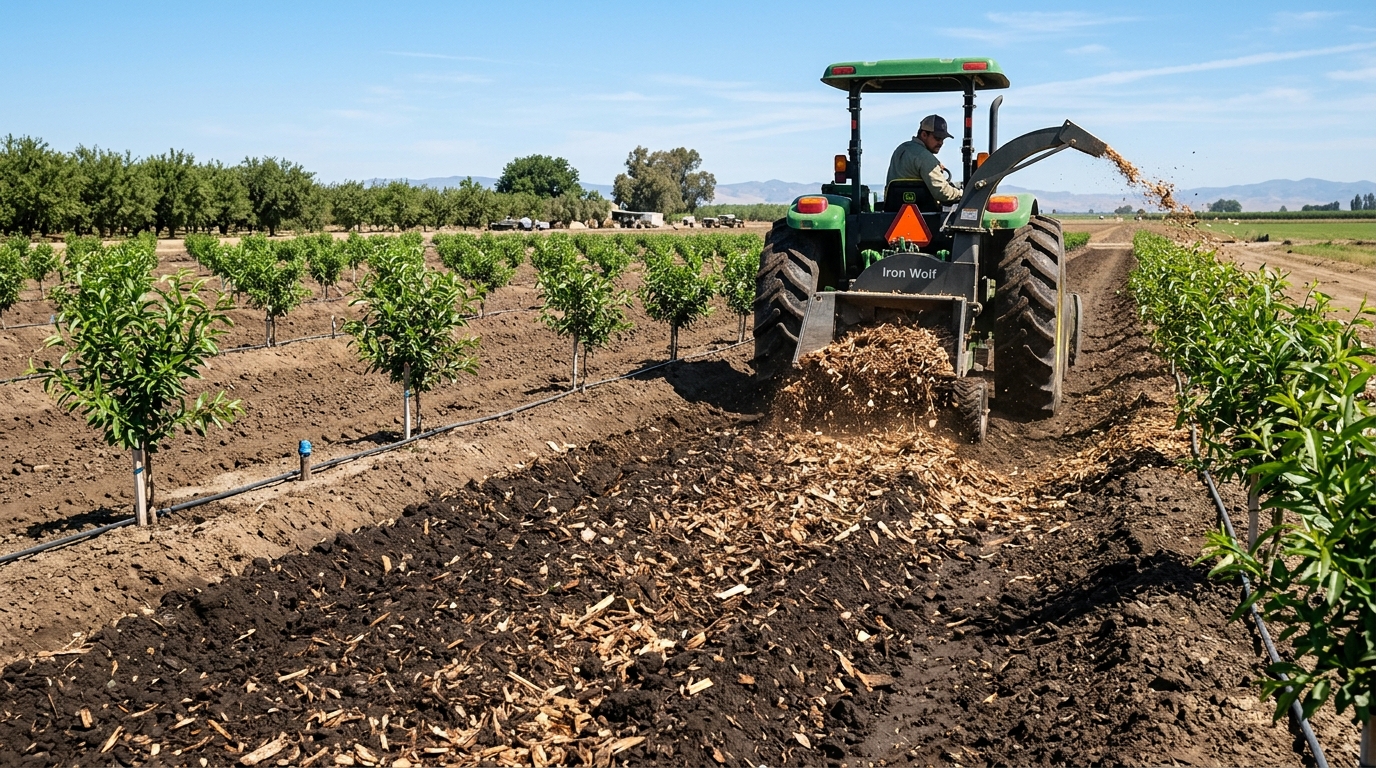
Without Bees,
There Are No Almonds.
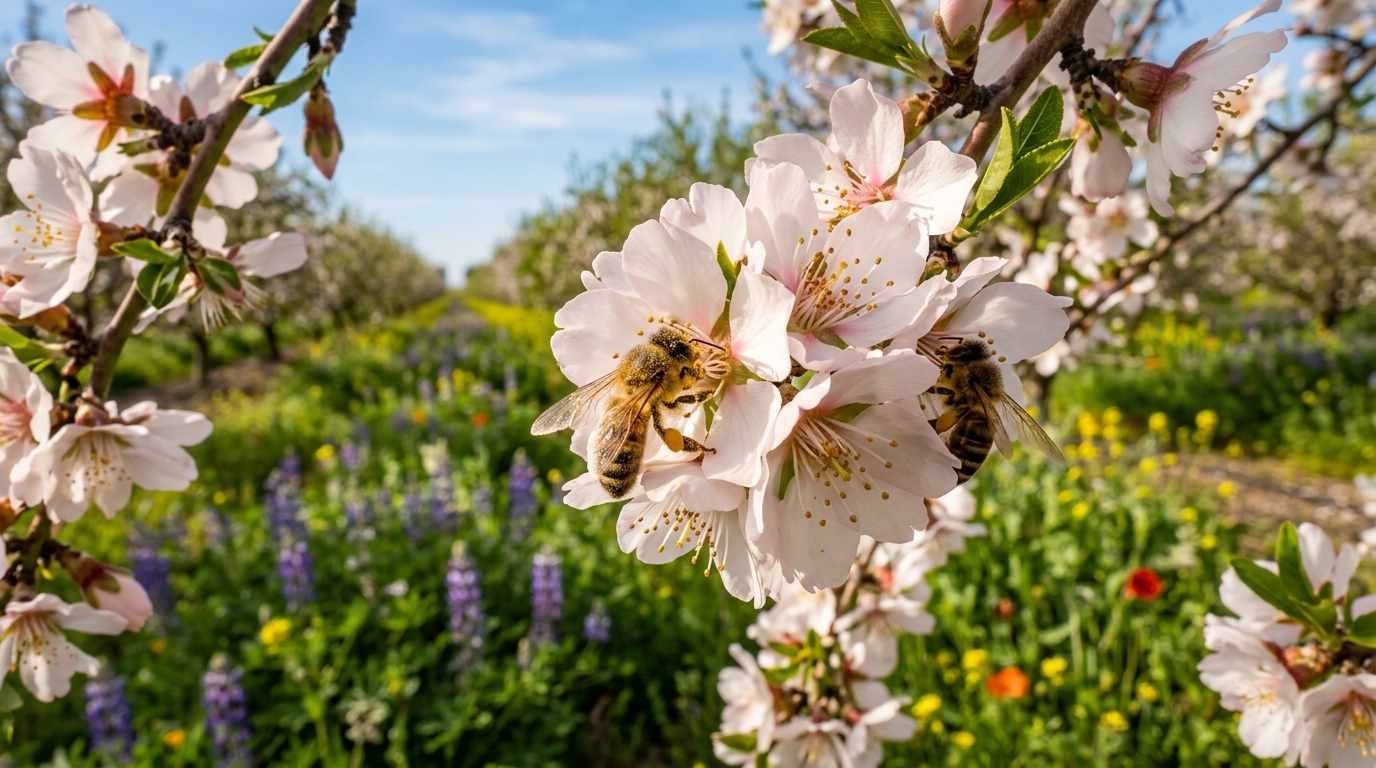
Almond trees are entirely dependent on bee pollination. Every February, our orchards burst into bloom and California almonds collectively draw nearly 88% of the US managed honeybee population to the Central Valley to pollinate the crop. That is the largest single managed pollination event on earth. The health of that bee population is not just a farming concern. It is an ecological responsibility.
Pacific Almonds has invested in a set of practices specifically designed to protect pollinator health on and around our orchard blocks. We plant wildflower habitat corridors along orchard borders, a mix of native California plants that provide nectar and pollen sources for bees before, during, and after the almond bloom. These corridors support not just managed honeybee colonies but also native bee populations, which are critical pollinators in their own right.
We strictly manage pesticide application to avoid bloom-time exposure. All spray applications near flowering trees are scheduled outside of bee-foraging hours, and we work directly with our contract beekeepers to monitor colony health throughout the pollination period. Healthy bees mean a better bloom, a fuller crop, and a more sustainable orchard ecosystem.
Learn More
Healthy Soil.
Healthy Almonds.
The foundation of every great almond is the soil it grows in. California's San Joaquin Valley has some of the deepest, most mineral-rich soils on earth, a geological legacy of thousands of years of alluvial deposition from the Sierra Nevada. Protecting and continuously improving that soil is both a farming obligation and a climate action.
Our soil management program is built around three goals: increasing organic matter, reducing compaction, and building long-term carbon stocks. We apply cover crops between orchard rows during the winter months, primarily legumes and grasses that fix atmospheric nitrogen, suppress weeds, and add organic matter when mowed or disced back into the soil. This reduces our reliance on synthetic nitrogen fertilisers, which have a significant carbon footprint to produce and apply.
Almond trees themselves are significant carbon stores. A mature almond orchard sequesters approximately 2.5 tonnes of CO₂ per acre per year across the tree biomass, root system, and soil organic matter. Through Whole Orchard Recycling, we extend that carbon storage into the soil rather than burning or chipping trees off-site. Our orchards are not just food systems. They are working carbon sinks.
Learn More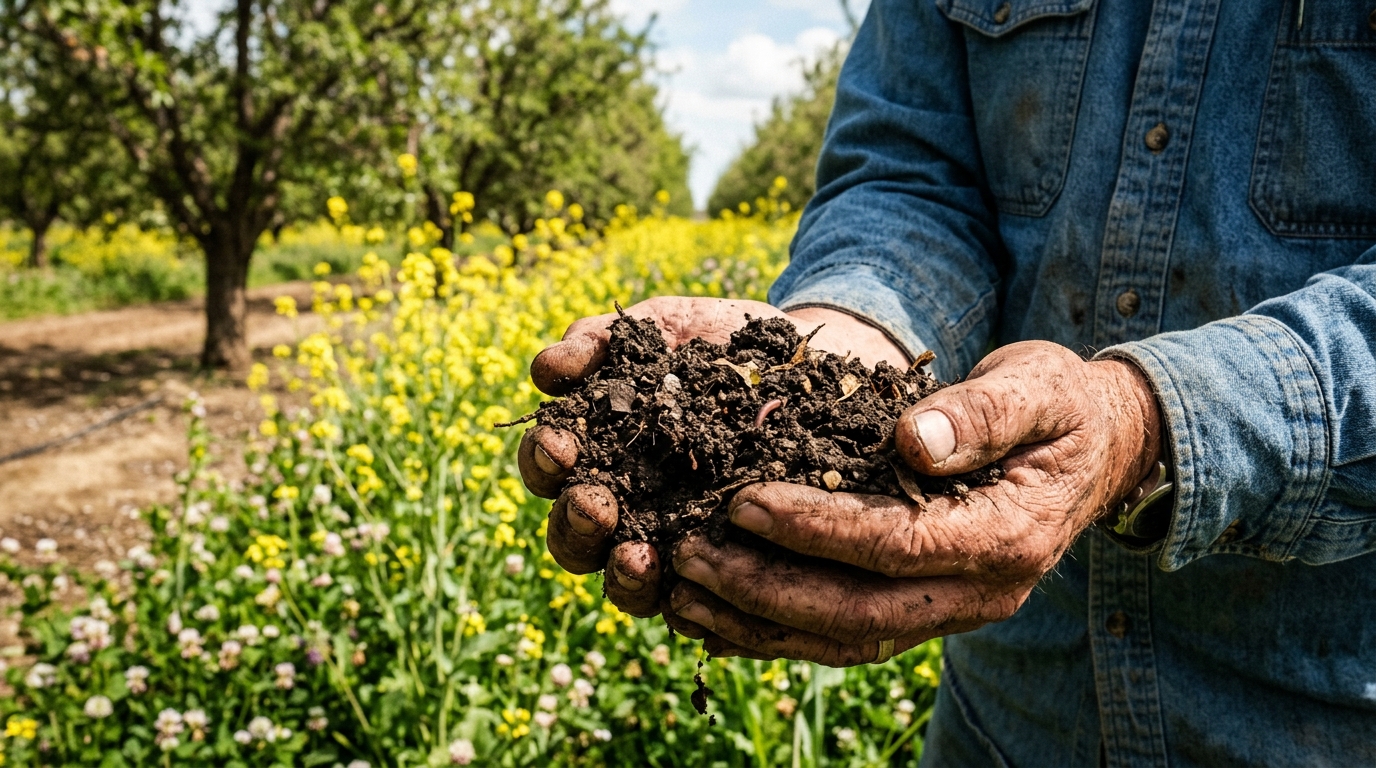
From Orchard Block
to Export Container.
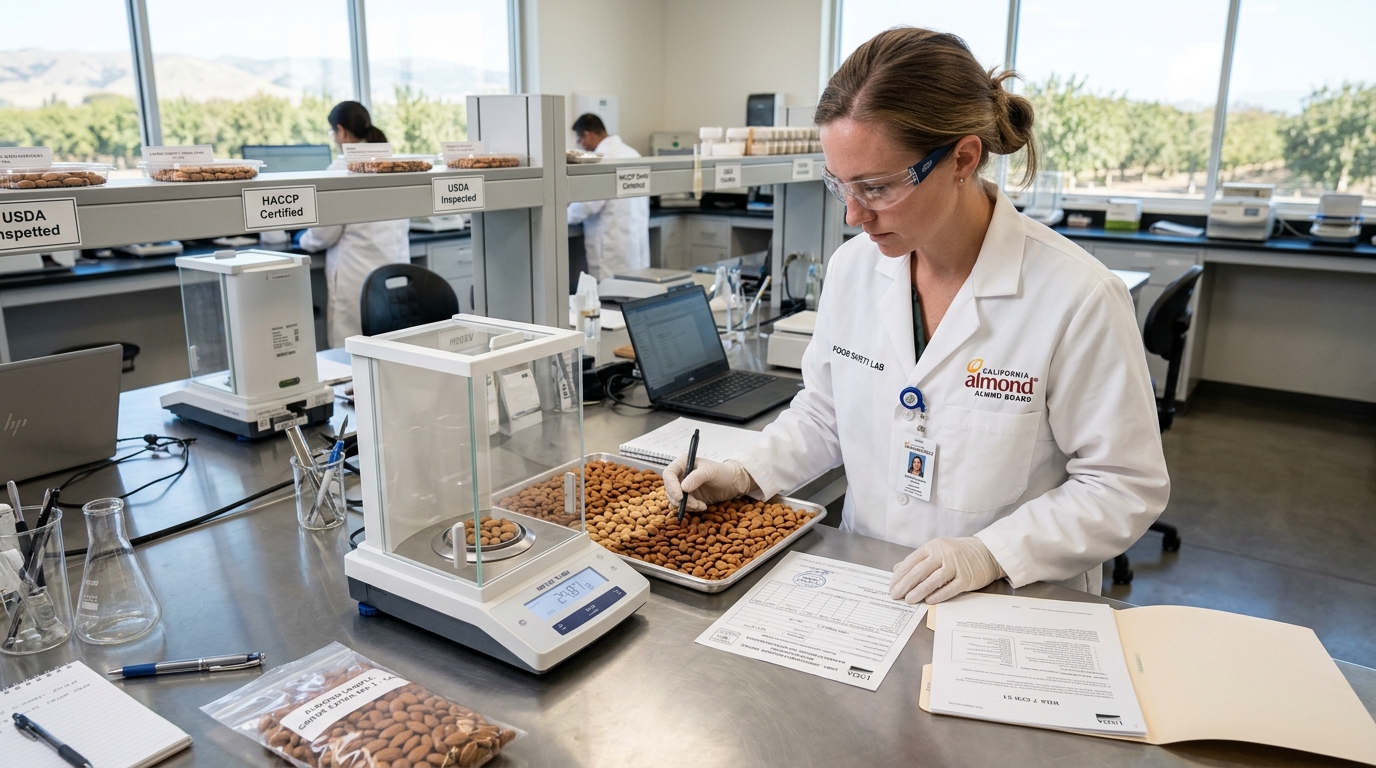
For food manufacturers, wholesale buyers, and retailers operating in regulated markets, sustainability is not just about what happens in the field. It is about being able to prove it. Pacific Almonds maintains complete lot traceability from the specific orchard block where a batch was grown, through every stage of processing, grading, and packaging, to the export container it departs in.
Every shipment leaves our facility with a full documentation package: USDA Grade-A certification, certificate of origin, phytosanitary certificate, fumigation certificate, and a certificate of analysis covering moisture content, defect levels, and microbial safety. Our pasteurisation process complies fully with the Almond Board of California's mandatory Programme Pest Management requirements, required for all almonds sold in commercial volumes in the United States and most international markets.
We are continuously working toward additional certifications including Rainforest Alliance and expanded organic-certified orchard blocks to meet the growing demand from European and Japanese buyers for certified sustainable produce. Our goal is to make traceability and certification as effortless as possible for our international partners, because the easier it is to verify our standards, the more confidently they can sell our almonds to their own customers.
Learn MoreSustainability Questions
Answers to the questions our international partners ask most about how we grow.
How much water does it take to grow a pound of almonds?
The water footprint of almonds is often misrepresented. By the same water-footprint measure used to cite almonds, a head of lettuce requires 3.5 gallons, a walnut 5 gallons, and a hamburger 660 gallons. California almond growers have reduced water use per pound by 33% since the 1990s through precision drip irrigation, and the Almond Board has committed to a further 20% reduction by 2025. Pacific Almonds is on track to meet that target.
Are your almonds USDA certified?
Yes. Every lot we ship is USDA Grade-A certified and fully compliant with the Almond Board of California's mandatory pasteurisation requirements. We provide a complete documentation package with every shipment including certificate of origin, phytosanitary certificate, fumigation certificate, and certificate of analysis.
Do you offer organic certified almonds?
We are currently in the process of transitioning several orchard blocks to certified organic production. Organic certification requires a three-year transition period during which no prohibited substances are applied. We expect our first certified organic lots to be available for the 2026/27 season. Contact our team to register your interest in advance.
What happens to almond hulls and shells after harvest?
Almond hulls are a primary livestock feed ingredient for California dairy and beef cattle. Shells are used as livestock bedding, soil amendments, and biomass fuel for renewable energy. End-of-life trees are chipped and incorporated back into the soil via Whole Orchard Recycling, sequestering carbon and improving soil structure. Nothing from our orchards goes to landfill.
How do you protect bees during the almond bloom?
We restrict all pesticide applications near flowering trees to outside bee-foraging hours (typically before dawn or after dusk), coordinate directly with our contract beekeepers on application timing, plant wildflower corridors along orchard borders to support both managed and native pollinator populations, and monitor colony health throughout the bloom period.
Can you provide a full traceability report for our audit?
Yes. Every lot is traceable from specific orchard block through processing, grading, packaging, and export. We can provide a full traceability report, certificate of analysis, and complete documentation package for any shipment. If your market or certification body requires additional documentation, contact our team and we will confirm what we can provide.