
Nonpareil vs Carmel Almond Variety Difference: Commercial Guide (2026)
Evaluating the nonpareil vs carmel almond variety difference is essential for food manufacturers, industrial bakers, and export buyers seeking the ideal balance between visual presentation and mechanical resilience. California orchards produce over thirty commercial cultivars, but Nonpareil and Carmel represent the primary dual-crop combination across Central Valley acreage. This definitive 2026 guide breaks down shell hardness, machinability, lipid chemistry, and processing yields to optimize your raw material sourcing.
Nonpareil: The Snacking & Confectionery Aesthetic Standard
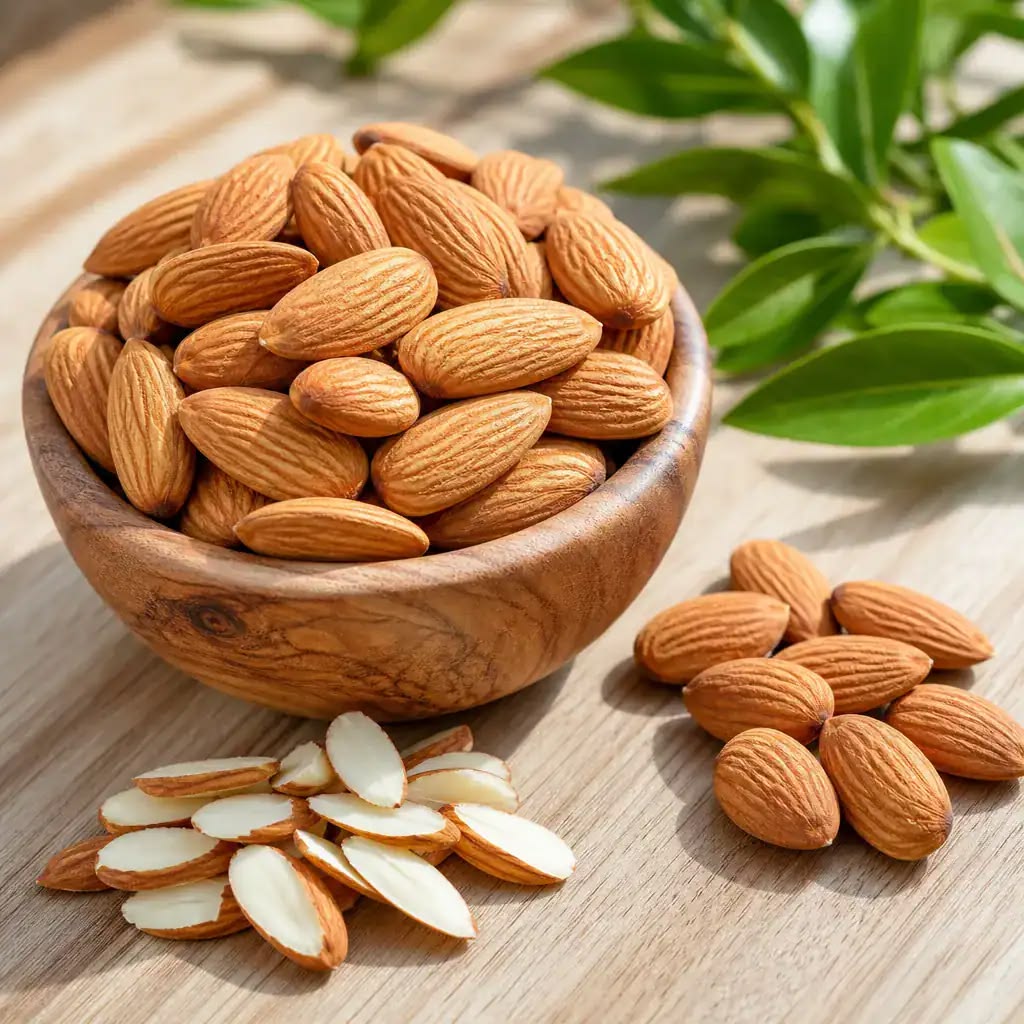
Introduced in 1879 by California horticulturalist A.T. Hatch, Nonpareil represents approximately 38% to 42% of total state harvest receipts. It commands consistent market price premiums based on three unique agronomic and visual traits:
Paper-Thin Shell Structure: Nonpareil features a brittle, paper-thin shell that yields 60% to 70% whole kernel meat by weight during cracking. This minimizes mechanical huller damage and preserves pristine skin integrity.
Visual Perfection & Smooth Outer Skin: The kernel is pale blonde, uniformly flat, broad, and oval with minimal surface creasing. For raw retail packaging, chocolate bar inclusions, and holiday gifting packs, its aesthetic excellence is unmatched.
Effortless Blanching: Nonpareil skins release smoothly in commercial steam scalding tunnels without flesh tearing, producing bright snow-white kernels for marzipan and bakery garnishing. Explore our complete line of whole California almonds for variety specifications.
Understanding the Nonpareil vs Carmel Almond Variety Difference
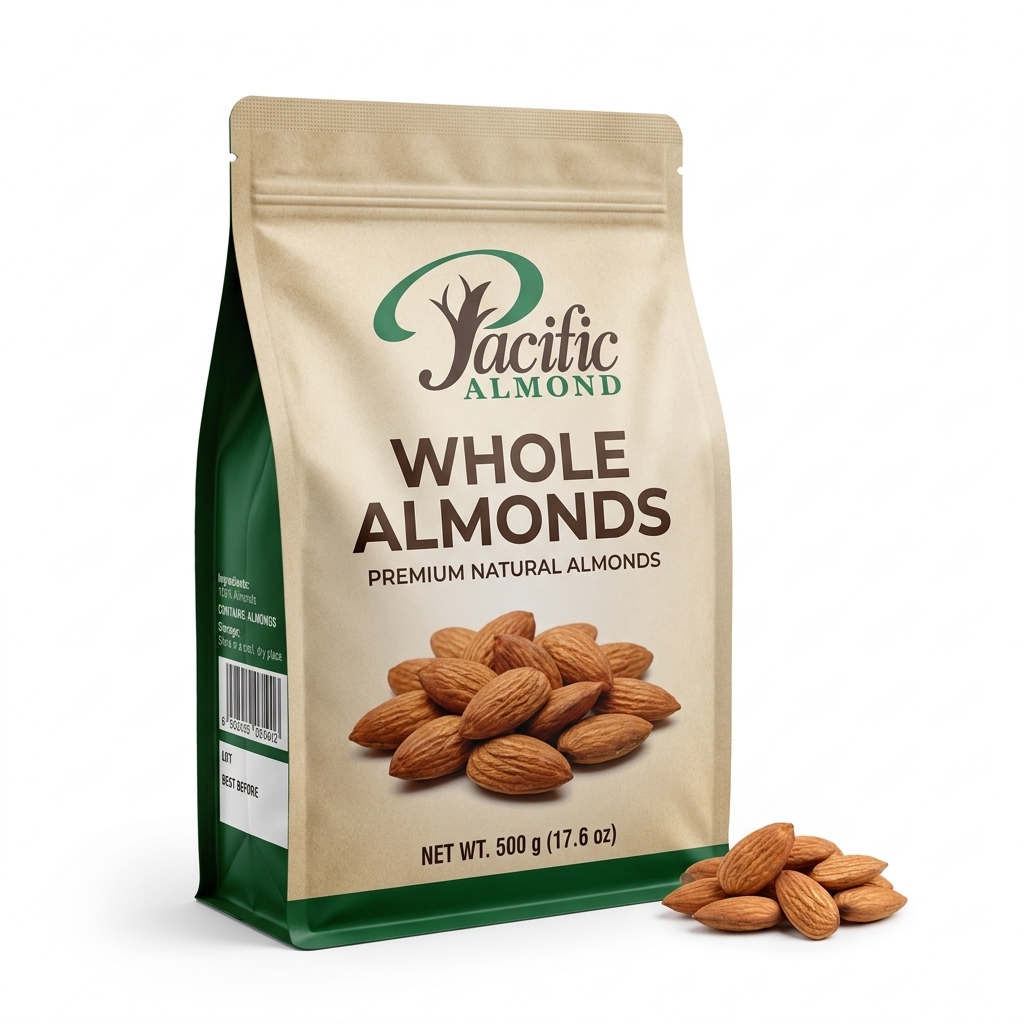
When analyzing commercial nut processing traits, manufacturing efficiency often outweighs cosmetic appearance. Carmel was developed as a cross-pollinator for Nonpareil orchards, flowering simultaneously in mid-February:
Shell Hardness & Crop Protection: Carmel produces a semi-hard outer shell that provides superior natural defense against Navel Orangeworm (NOW) and field insect pests. This results in consistently lower insect-damaged reject percentages at harvest.
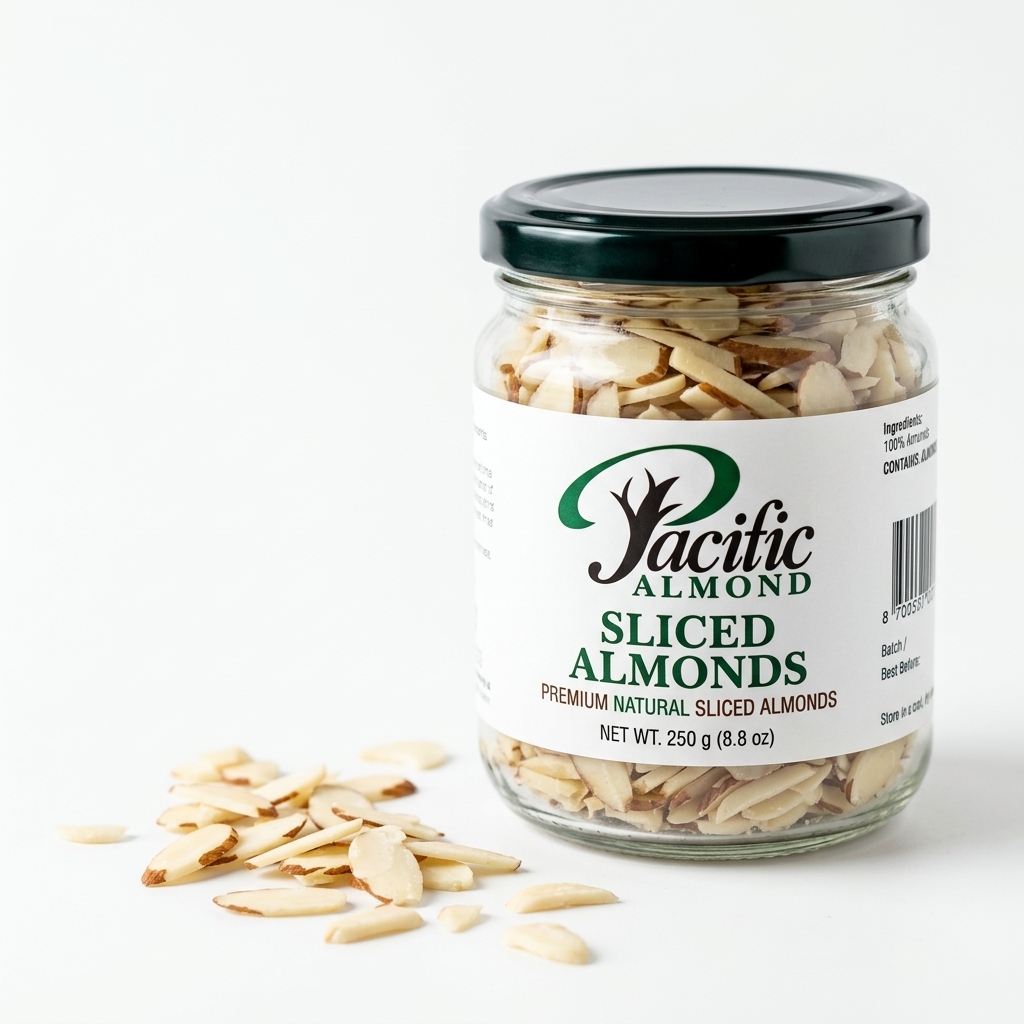
Mechanical Slicing & Slivering Resilience: Carmel kernels are narrower, slightly thicker, and feature a rougher, darker skin. Because its cellular structure is structurally denser, Carmel withstands high-speed rotary cutting blades with 10% to 15% less shattering than softer Nonpareil kernels.
Cost-Effective Industrial Sourcing: Commercial bakers, granola packagers, and cereal manufacturers commonly select Carmel to reduce ingredient costs while retaining whole-flake integrity in finished products. Review our precision sliced and slivered almond options.
Matching Cultivar Traits to Industrial Processing Lines
Choosing the incorrect cultivar can increase industrial slicing breakage by up to 14% or alter the mouthfeel of plant-based milk formulations. Precision manufacturing starts with cultivar selection.
Source: UC Davis Fruit & Nut Research Information Center & Almond Board of California.
Hard-Shell Cultivars: Butte, Padre, Monterey and Mission
Beyond the Nonpareil and Carmel combination, California handlers offer specialized cultivars tailored for heavy food processing:
Butte & Padre Blend: Short, rounded, plump kernels harvested late in the season. Highly insect-resistant with high protein density and uniform small sizing (27/30 CPO), they are the primary choice for chocolate candy panning and energy bars.
Monterey: Long, narrow kernel with deep skin wrinkling. It delivers excellent oil content and deep roasted flavor, making it a favorite for commercial roasting and seasoned snack packaging.
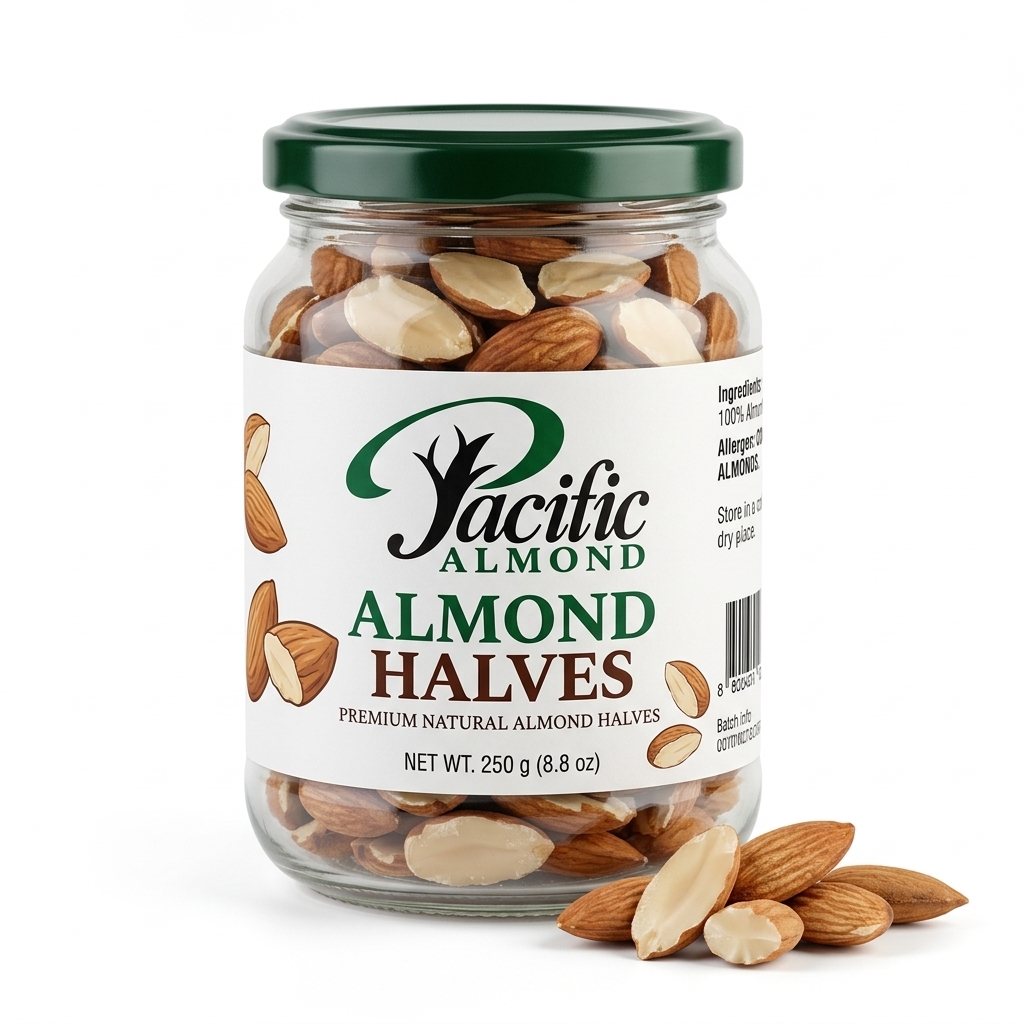
Mission: The historic heirloom variety. Mission possesses thick, cinnamon-colored skins and the highest oil content (up to 56%) among commercial varieties. Its bold, robust flavor makes it ideal for almond paste, marzipan, and cold-pressed almond oil. Learn more about our milling process for almond flour and meal.
Machinability & Lipid Dynamics in Food Processing
Processing performance depends directly on the fatty acid matrix and cellular density of each cultivar:
During dry roasting at 320°F (160°C), Nonpareil browns rapidly on the surface due to higher natural reducing sugars, producing a sweet, delicate crunch. Mission and Padre require extended roasting curves to penetrate dense kernel walls, providing a deeper roasted aroma and longer crispness in packaged mixes.
For almond milk and plant-based dairy formulators, higher-fat cultivars like Mission and Monterey create creamier emulsions with superior viscosity, reducing the need for synthetic stabilizers. Learn about our environmental commitments in our guide to sustainable California almond farming.
Varietal Physical Specifications & Chemical Matrix
Comparative data across major commercial California cultivars for procurement and product formulation.
Paper-shell (Nonpareil), Soft-shell (Carmel), and Hard-shell (Mission, Butte) define mechanical protection.
Staggered harvest sequence from August (Nonpareil) through October (Mission) ensures continuous fresh supply.
Nonpareil achieves >98% skin release efficiency in commercial scalding; Mission is primarily roasted natural.
Fat profiles range from 50% (Nonpareil light crunch) to 56% (Mission dairy emulsions and pastes).
Commercial California Almond Cultivar Matrix
Technical parameters for food formulation, slicing lines, and export contracting.
| Almond Variety | Shell Type | Kernel Shape & Skin Color | Avg Fat Content (%) | Primary Commercial Use |
|---|---|---|---|---|
| Nonpareil | Paper-shell (65% meat) | Flat, broad, smooth blonde | 50% - 52% | Raw snacking, chocolate bars, retail packs |
| Carmel | Soft-shell (55% meat) | Narrow, slightly wrinkled | 52% - 54% | Slicing, slivering, dicing, baking |
| Butte & Padre | Semi-hard (50% meat) | Short, round, plump, light brown | 52% - 54% | Candy panning, chocolate bars, energy snacks |
| Monterey | Hard-shell (45% meat) | Long, narrow, wrinkled dark brown | 53% - 55% | Dry roasting, trail mixes, food service |
| Mission | Hard-shell (40% meat) | Small, round, deep cinnamon skin | 54% - 56% | Almond butter, paste, marzipan, oil extraction |
Request Variety Samples & Sourcing Guidance
Connect with our food scientists to request physical variety samples or evaluate processing performance on your manufacturing lines.
Sourcing Takeaways
Frequently Asked Questions: Almond Varieties Comparison
Common technical questions regarding cultivar selection and industrial manufacturing.
What is the primary Nonpareil vs Carmel almond variety difference?
The primary difference lies in shell hardness, kernel shape, and processing durability. Nonpareil features a paper-thin shell, pale blonde skin, and smooth oval profile, making it the snacking and confectionery favorite. Carmel has a semi-hard shell and narrower kernel that resists blade shattering during commercial slicing and slivering.
Why does Nonpareil command a market price premium over Carmel?
Nonpareil yields the highest percentage of pristine whole kernels during hulling (often 65% or higher), commands global consumer recognition for retail snacking, and blanches with ease without surface skin tearing, justifying a consistent price premium.
Which variety is better for industrial food slicing and baking?
Carmel is widely preferred for precision mechanical slicing and dicing because its denser cellular structure reduces broken flake percentages by 10% to 15% compared to softer Nonpareil kernels.
How do lipid profiles compare across California almond varieties?
Nonpareil typically contains 50% to 52% total fat with a light, crisp bite. In contrast, hard-shell varieties like Mission and Monterey exhibit up to 55% to 56% fat content, creating richer natural emulsions for almond milk and almond butter.