Bulk Almond Export Container Load: Logistics & Incoterms Guide (2026)
Managing a bulk almond export container load across transoceanic maritime lanes requires rigorous logistics engineering, cargo sweat prevention, and precise Incoterms liability allocation. Transporting California almonds from the Port of Oakland or Long Beach to destination hubs like Rotterdam, Nhava Sheva, or Jebel Ali involves 10,000+ nautical miles of open ocean. This complete 2026 operational guide provides commodity buyers with actionable protocols for 20ft vs 40ft container physics, desiccant blankets, bill of lading documentation, and CIF versus FOB risk hedging.
Port of Oakland & Port of Long Beach: California Agricultural Lifelines
The overwhelming majority of California's agricultural exports rely on two deepwater gateways along the Pacific Coast:
Port of Oakland: Located within a 1.5 to 3.5-hour truck drayage radius from Central Valley huller-sheller facilities, Oakland handles over 70% of California’s agricultural export containers. Its Outer and Middle Harbor terminals offer direct first-port-of-call container vessel sailings on Transpacific, Mediterranean, and European loops. Learn more at the official Port of Oakland maritime portal.
Port of Long Beach / Los Angeles: Serving Southern Central Valley packers in Kern County, the San Pedro Bay port complex provides heavy container rail connections and extensive liner services across South Asia and Latin America. Check our regional maritime services in South Asia and Western Europe.
20ft vs 40ft Bulk Almond Export Container Load Physics
Optimizing a bulk almond export container load depends heavily on product density and highway road weight limits:
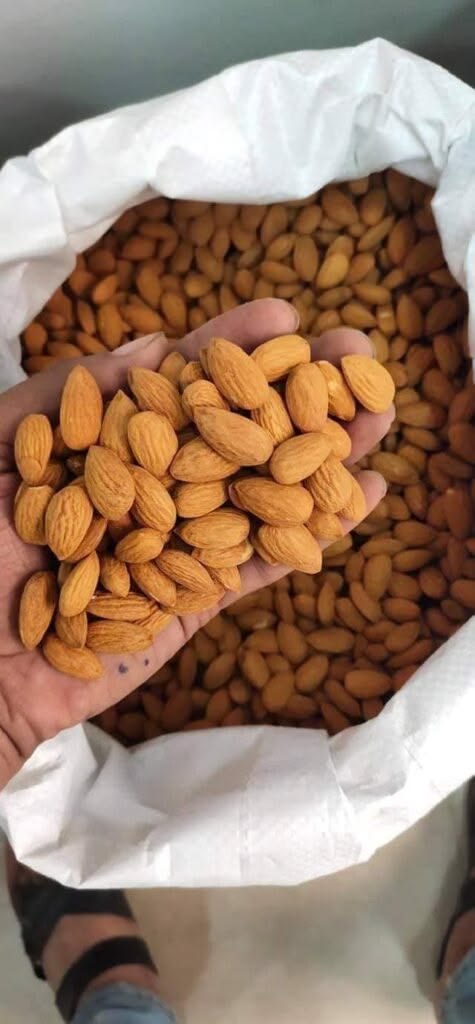
20ft Standard Ocean Containers (Shelled Kernels): Shelled almond kernels possess a high bulk density (~42 lbs per cubic foot). Consequently, a 20ft ocean container "weighs out" before it "cubes out." Packers load approximately 1,600 of the 25-lb cartons or 800 of the 50-lb cartons, achieving a net cargo payload of 40,000 to 44,000 lbs (18 to 20 metric tonnes).
40ft High-Cube Containers (In-Shell Almonds): In-shell almonds contain substantial trapped airspace inside the hull and shell structure. Because of this lower density, shipments to India and China frequently utilize 40ft containers loaded with 50kg polypropylene bags, reaching 42,000 to 45,000 lbs net weight. Explore our complete line of commercial whole almonds.
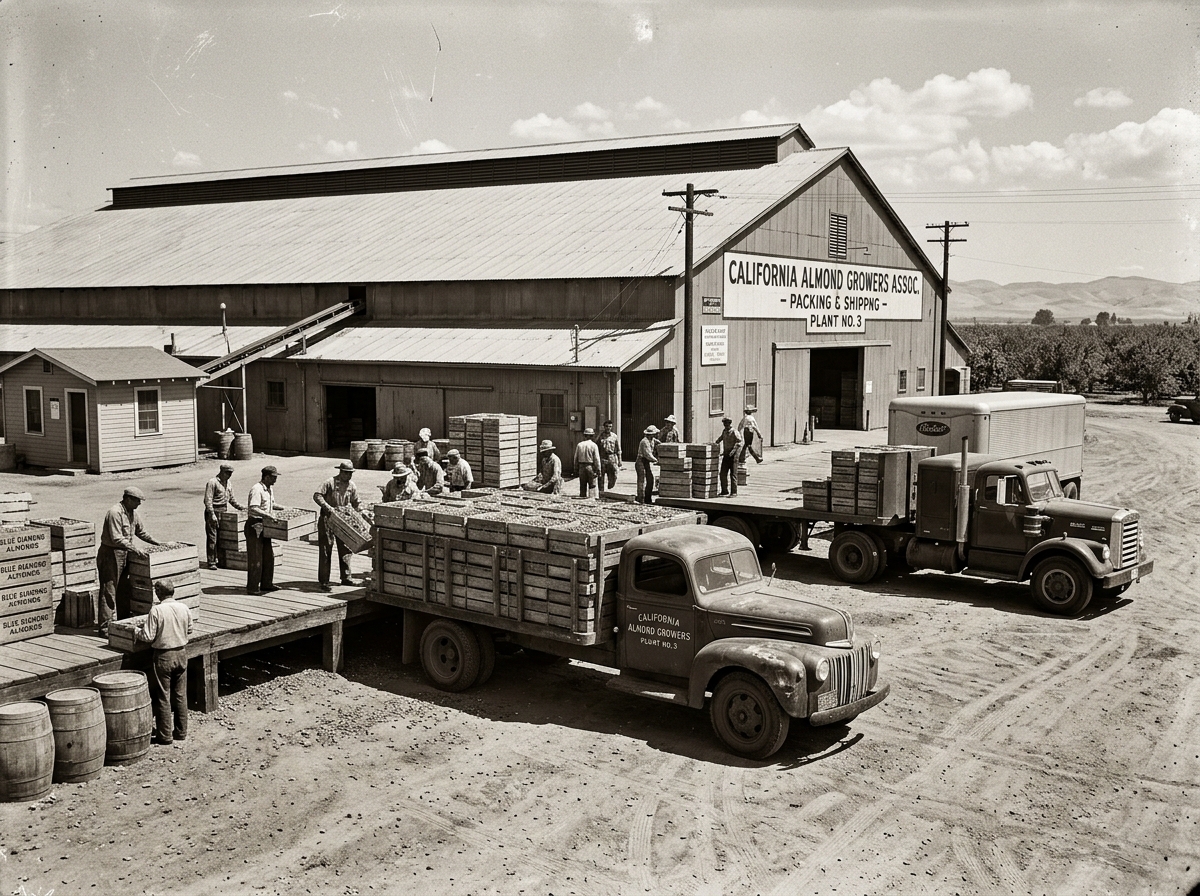
Axle Weight Compliance: California highway regulations enforce a strict 80,000 lb gross vehicle weight limit. Using specialized tri-axle chassis allows processors to maximize container payload legally from our Lost Hills plant to terminal berths.
Zero Cargo Sweat: Desiccant Blankets & Moisture Ceilings
Every container leaving Pacific Almonds is lined with high-absorption calcium chloride desiccant blankets, guaranteeing that trans-equatorial humidity cannot condense into mold-inducing moisture.
Compliant with International Container Shipping Guidelines & Almond Board of California Quality Standards.
Preventing Cargo Rain: Desiccant Blankets & Moisture Barriers
When a shipping container moves from cold Pacific winter air through equatorial zones toward Europe or the Middle East, temperature swings can exceed 40°F (22°C). Without proactive measures, this differential causes warm air to release water vapor against the steel container ceiling—a phenomenon known as "container rain."
To safeguard every shipment, we enforce strict protocols:
Moisture Specification Ceiling: Almond lots are packed at strictly 4.0% to 6.0% kernel moisture. Almonds shipped above 6.5% moisture introduce excess water activity into the enclosed space, sharply increasing mold and free fatty acid degradation.
Suspended Calcium Chloride Desiccants: We install heavy-duty desiccant poles and top-mounted blankets capable of absorbing up to 300% of their weight in moisture, safely locking water into a leakproof gel. Learn about our environmental standards in our sustainable almond farming overview.
Incoterms 2020 Allocation: FOB vs CIF vs CFR Breakdown
Choosing the right commercial Incoterms rules under ICC Incoterms 2020 establishes clear responsibility for freight costs, marine insurance, and customs clearance:
FOB (Free on Board - Port of Oakland / Long Beach): The seller delivers cargo across the vessel's rail and handles U.S. export clearance. The international buyer selects the ocean carrier, negotiates maritime rates, and assumes freight and demurrage risk. Ideal for large multinational importers with volume service contracts.
CIF (Cost, Insurance, and Freight - Destination Port): Pacific Almonds books and prepays ocean freight to your destination port and secures marine insurance covering 110% of commercial invoice value under Institute Cargo Clauses (A). Highly recommended for regional roasters and food processors wanting predictable delivered costs.
CFR (Cost and Freight): The seller pays maritime carriage costs to the destination port, while the buyer arranges independent marine transit insurance. Review our global export intelligence in our report on California almonds export market dynamics.
Ocean Freight Logistics & Transit Times Schedule
Transit durations, container capacities, desiccant specifications, and export documentation requirements.
Optimal container sizing for shelled kernels, flour, and diced cuts avoiding road axle overweight fines.
Calcium chloride absorption blankets absorb up to 300% dry weight, neutralizing container condensation.
All CIF contracts covered by comprehensive all-risk Institute Cargo Clauses (A) up to 110% of CIF value.
USDA Phytosanitary, Certificate of Origin, Bill of Lading, and ISO 17025 CoA provided for every shipment.
Major Ocean Shipping Corridors & Transit Times from Port of Oakland
Direct liner transit benchmarks to primary global almond receiving hubs.
| Destination Port | Region | Avg Ocean Transit | Primary Container Type | Typical Incoterms |
|---|---|---|---|---|
| Nhava Sheva (JNPT Mumbai) | South Asia / India | 28 - 34 Days | 40ft FCL (Inshell 50kg bags) | CFR / CIF Mumbai |
| Rotterdam / Hamburg | Western Europe | 22 - 28 Days | 20ft FCL (Shelled 25lb cartons) | FOB Oakland / CIF Rotterdam |
| Jebel Ali (Dubai) | Middle East / UAE | 30 - 36 Days | 20ft & 40ft FCL (Mixed lots) | CIF Jebel Ali |
| Yokohama / Kobe | East Asia / Japan | 14 - 18 Days | 20ft FCL (Vacuum pack / cartons) | FOB Oakland / CIF Yokohama |
| Cat Lai (Ho Chi Minh) | Southeast Asia | 20 - 24 Days | 20ft & 40ft FCL (Shelled & Inshell) | CFR Cat Lai |
Request Freight Rates & Vessel Bookings
Connect with our maritime logistics desk to secure guaranteed vessel allocations, container freight quotes, or specialized desiccant packaging.
Logistics Takeaways
Frequently Asked Questions: Almond Ocean Logistics
Common inquiries regarding container capacity, ocean freight, and cargo insurance.
What is the standard weight capacity of a bulk almond export container load?
A standard 20-foot Full Container Load (FCL) accommodates approximately 40,000 to 44,000 lbs (18 to 20 metric tonnes) of packed almonds in 25-lb cartons or bulk super sacks. A 40-foot container is typically utilized for lower-density in-shell almonds, carrying approximately 42,000 to 45,000 lbs without exceeding highway axle limits.
How is container sweat prevented during transoceanic almond voyages?
Handlers install calcium chloride desiccant blankets across top carton layers, apply breathable vapor barriers, and maintain initial almond kernel moisture strictly between 4.0% and 6.0%. This prevents warm air condensation during equatorial sea transits.
What is the difference between FOB and CIF Incoterms for almond buyers?
Under FOB (Free on Board) Oakland/Long Beach, the buyer selects the maritime shipping line, pays freight charges, and assumes cargo risk once containers pass ship's rail. Under CIF (Cost, Insurance, and Freight), Pacific Almonds arranges and prepays ocean carriage and marine transit insurance to the destination port.
What export documentation accompanies each container load?
Every export container is accompanied by an ocean Bill of Lading (B/L), Commercial Invoice, Packing List, USDA-APHIS Phytosanitary Certificate, Certificate of Origin, and an accredited ISO 17025 Certificate of Analysis (CoA).