Healthy Soil.
Healthy Almonds.
Transforming California orchards into active carbon sinks through winter cover cropping, mycorrhizal biological activation, and organic matter stewardship.
Nurturing California’s Deep Alluvial Loam
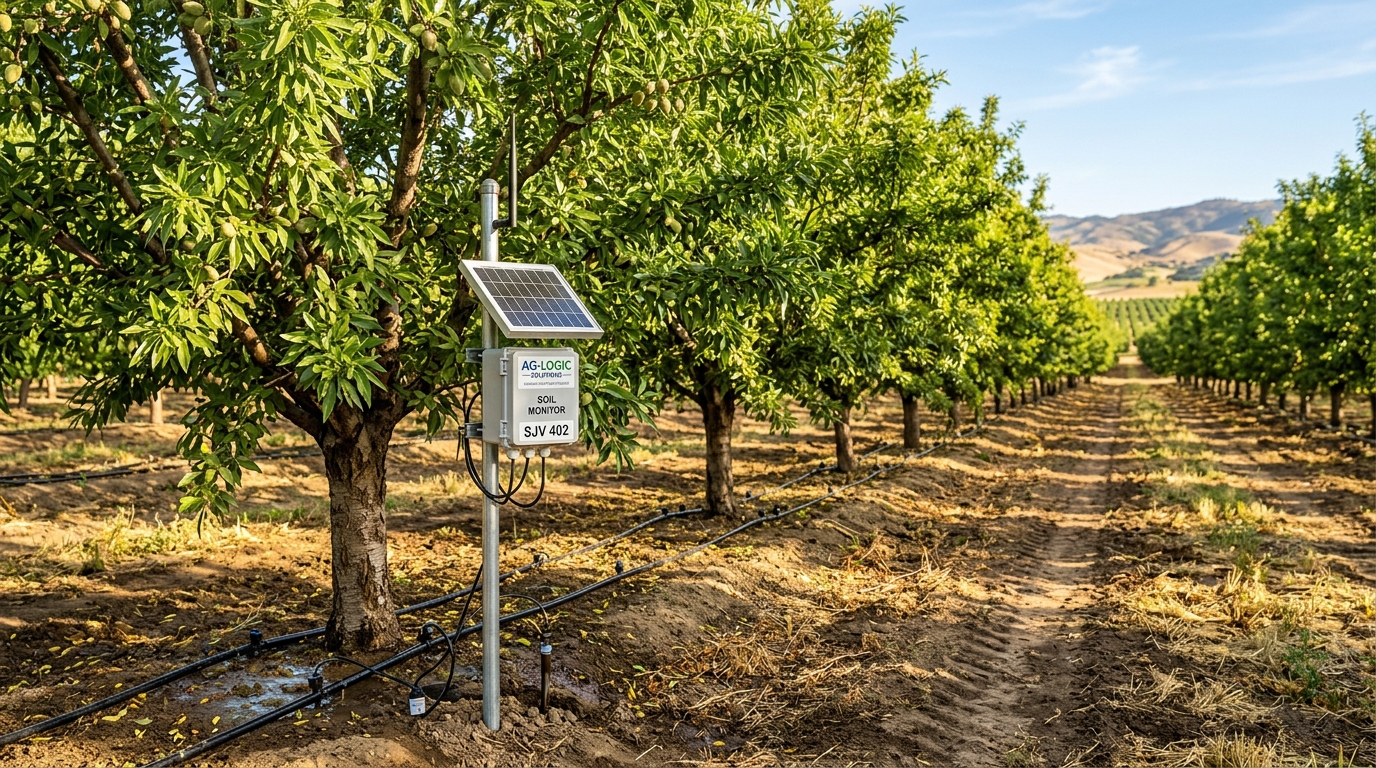
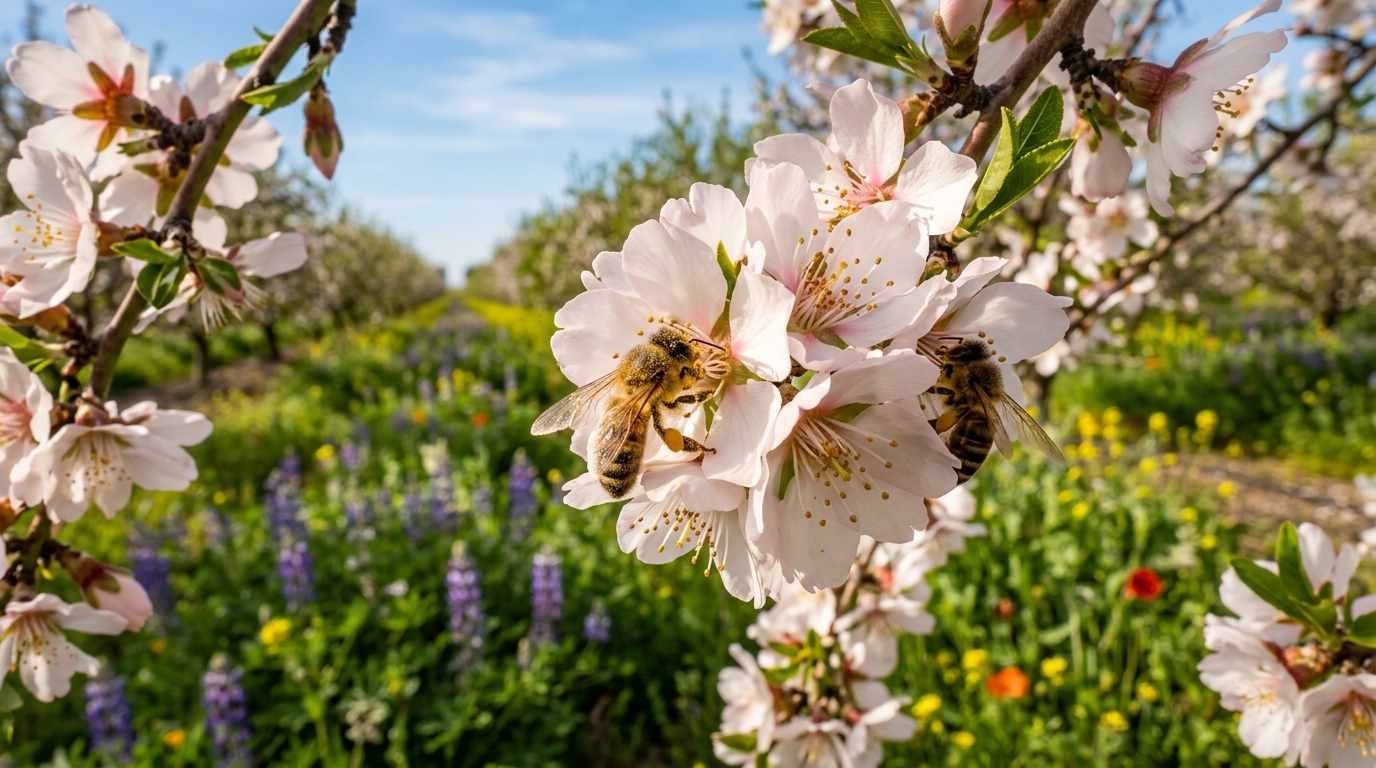
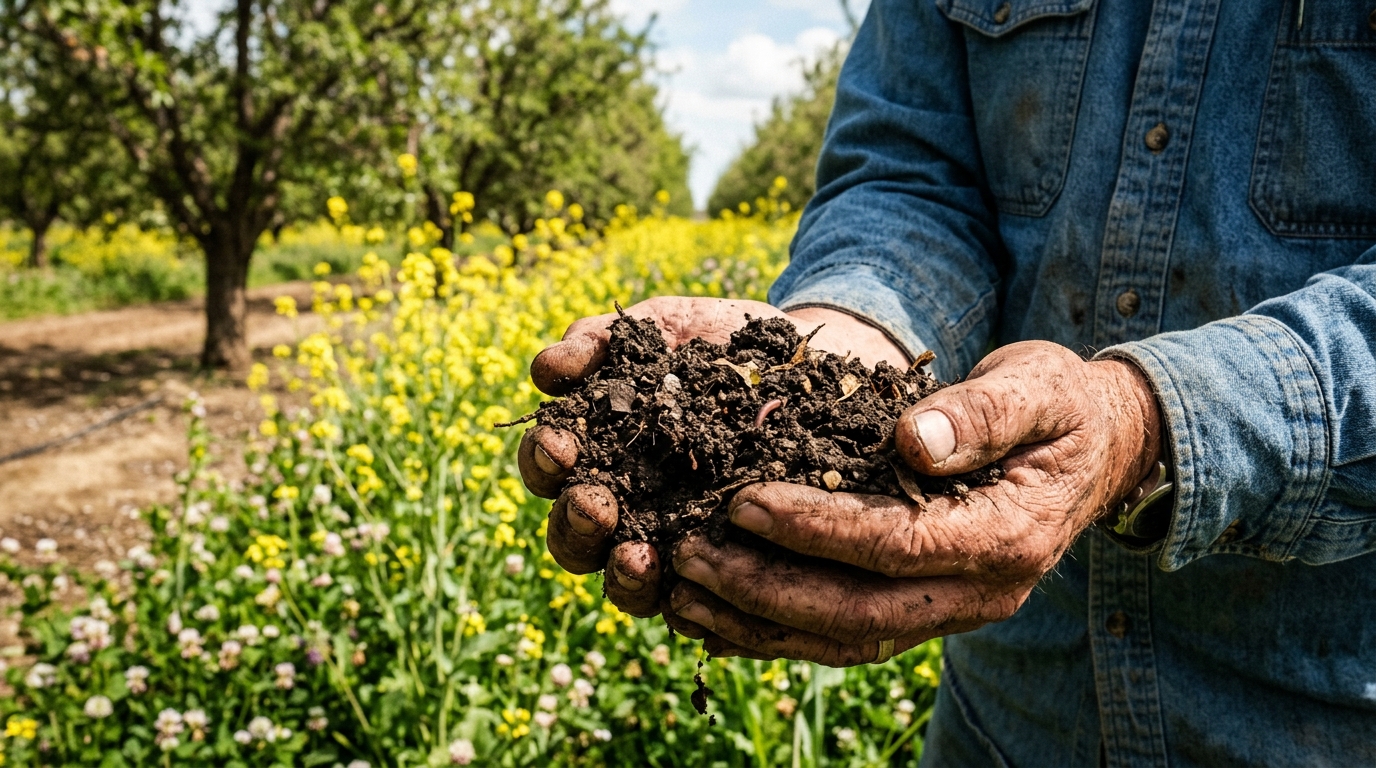
The California San Joaquin Valley possesses some of the most fertile, mineral-rich soils on earth, formed by millennia of glacial mineral deposition from the Sierra Nevada mountains. At Pacific Almonds, our soil stewardship focuses on building living topsoil. By seeding winter cover crops between tree rows—a dynamic mix of legumes, mustard, and cereal grasses—we fix atmospheric nitrogen, suppress weeds, and boost biological microbial density across our orchard floors.
Orchards Operating as Living Carbon Sinks
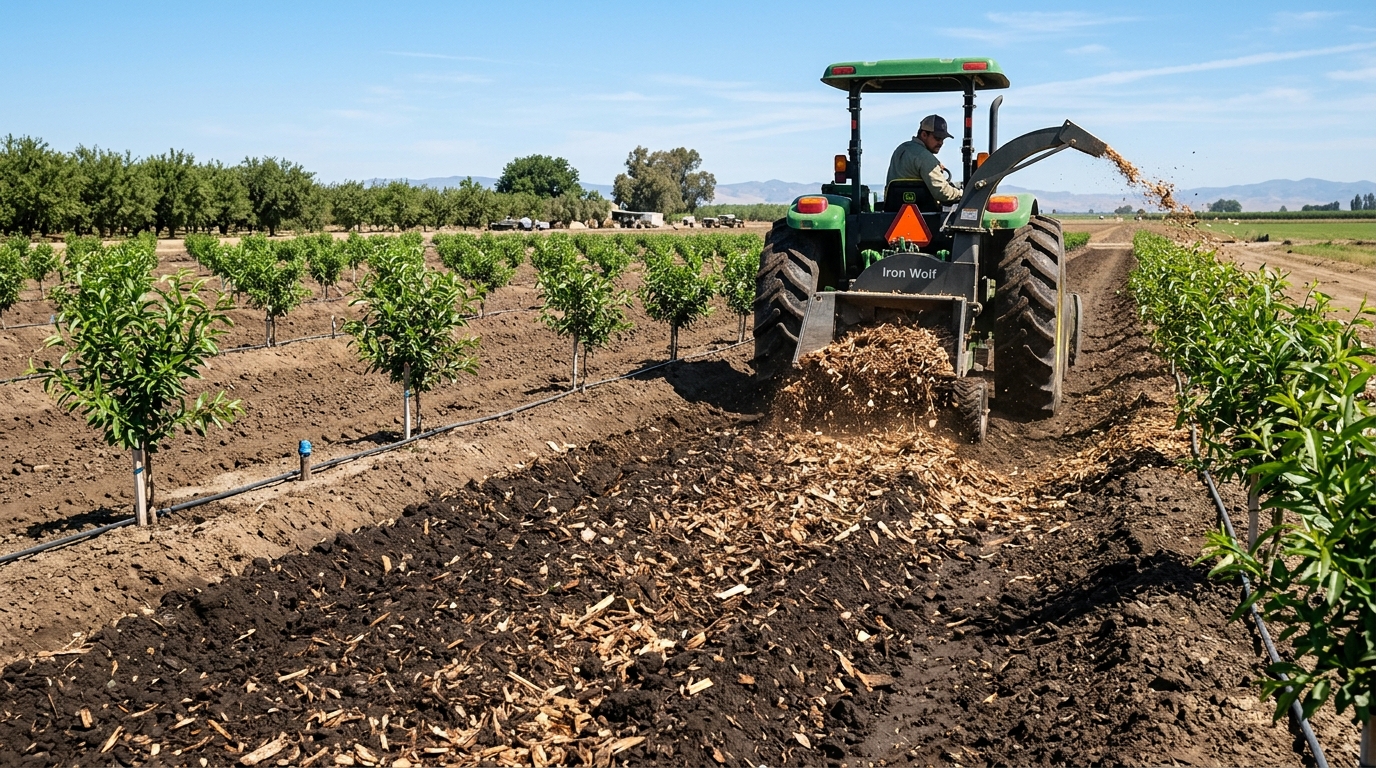
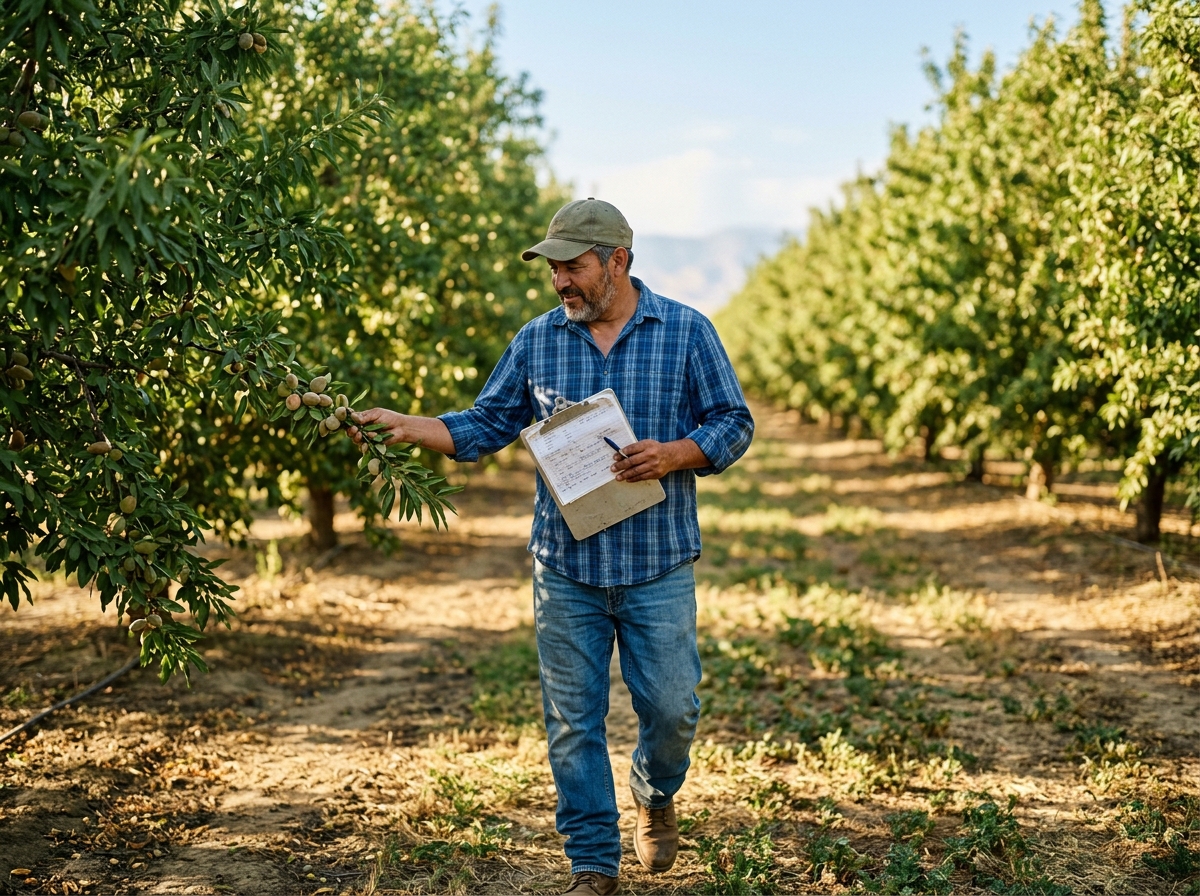
Almond trees are permanent woody perennials that act as carbon accumulation engines throughout their quarter-century lifespan. California's 1.3 million bearing almond acres collectively store an estimated 30 million metric tons of CO₂ equivalent in living wood, deep root biomass, and stabilized soil humus. When combined with Whole Orchard Recycling and no-till cover cropping, our orchards actively withdraw greenhouse gases from the atmosphere, providing true climate resilience.
The Pacific Almonds Difference
As your trusted almond partner, we hold our environmental stewardship to the same uncompromising standards as our kernel quality. Our growers pledge active soil regeneration, zero artificial additives, and USDA Grade-A certification. Every shipment delivers purity, freshness, and verified harvest-to-container traceability.
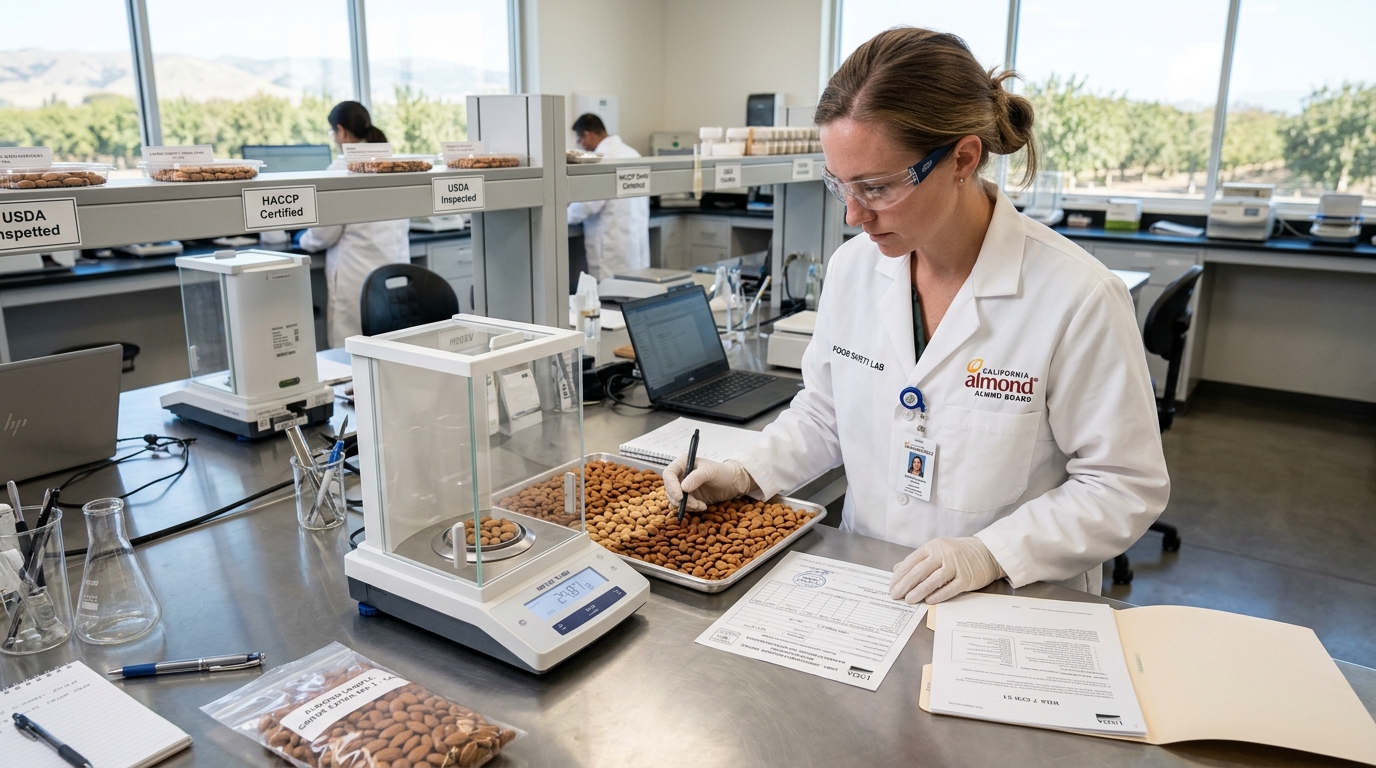
*Certified USDA Grade-A. Every export shipment includes full accredited lab CoA, phytosanitary clearance, and certified soil carbon sequestration documentation.
Verified Soil Carbon & Biological Data
Independent university and CDFA telemetry tracking soil organic matter build, nitrogen fixation, and living root networks.
Soil Stewardship Protocols & Certifications
Verified standards driving long-term soil productivity and climate action.
CDFA Healthy Soils Verification
Cover cropping and organic soil amendment practices enrolled in California’s premier state carbon-farming incentive initiative.
USDA-NRCS Conservation Standards
Alignment with Natural Resources Conservation Service protocols for reducing soil erosion, boosting organic matter, and protecting water tables.
Biological Nitrogen Fixation
Winter legume nodulation captures atmospheric nitrogen naturally, decreasing synthetic chemical fertilizer reliance by up to 25%.
Compaction Mitigation
Flotation tire equipment and deep tap-root cover crops penetrate compacted subsoils, restoring natural aeration and drainage pathways.