Nothing We Grow
Goes to Waste.
Closing the loop through Whole Orchard Recycling, nutrient-dense cattle feed hulls, and clean renewable biomass energy.
Returning the Forest Back to the Soil
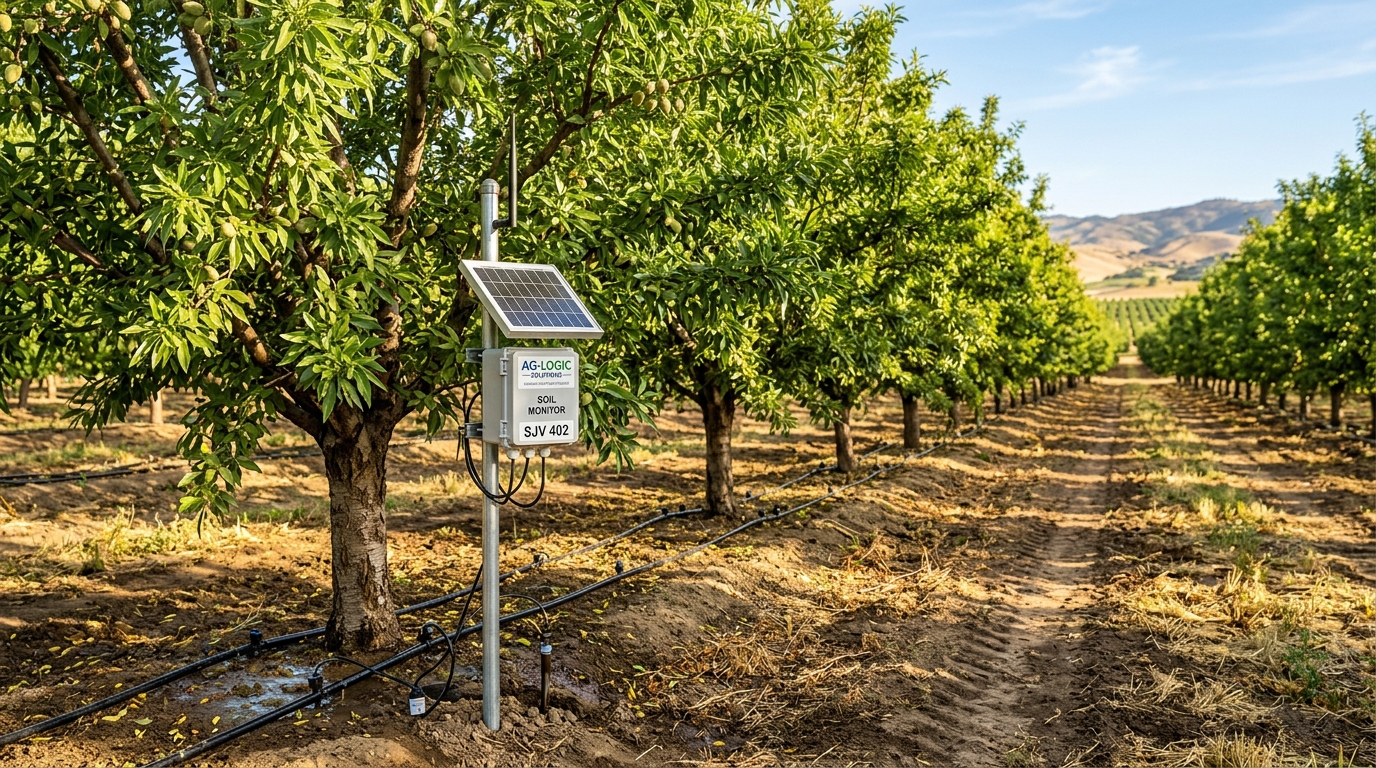
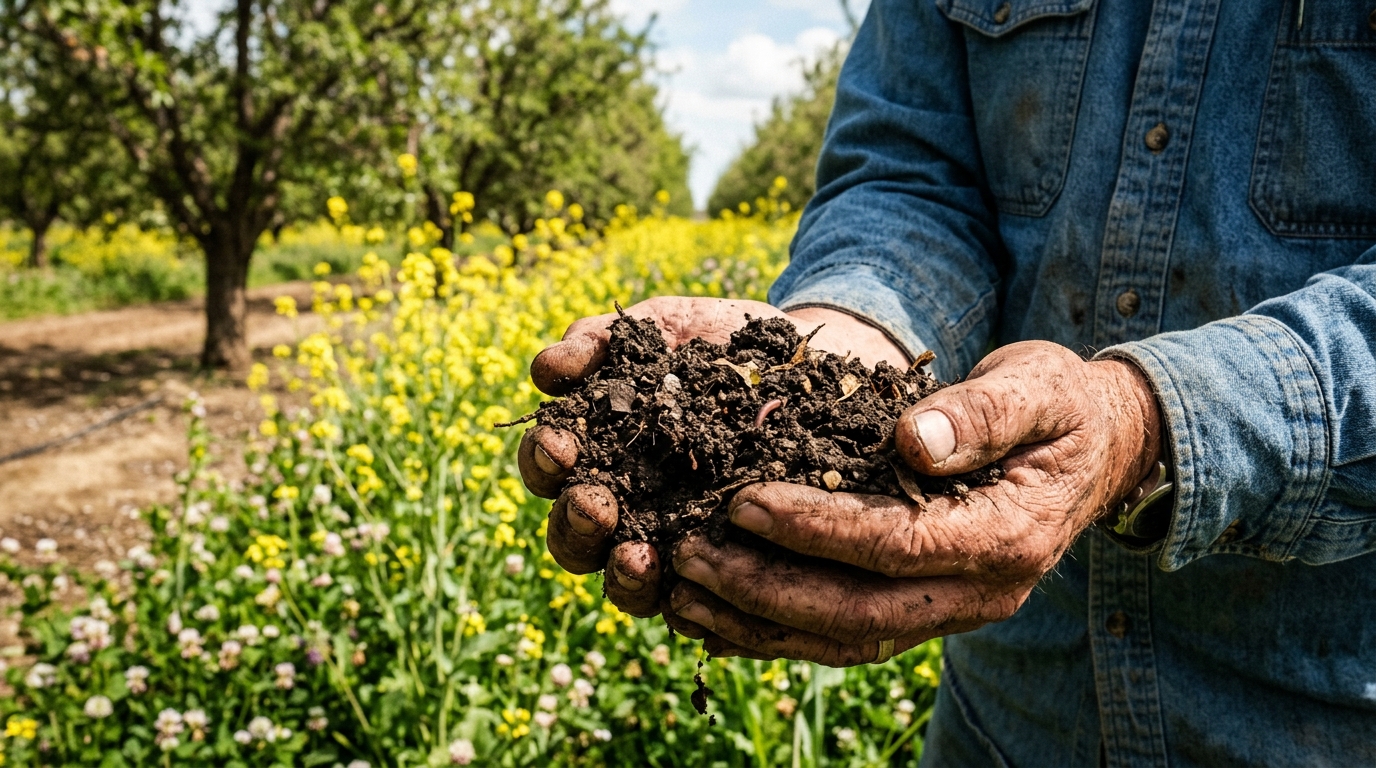
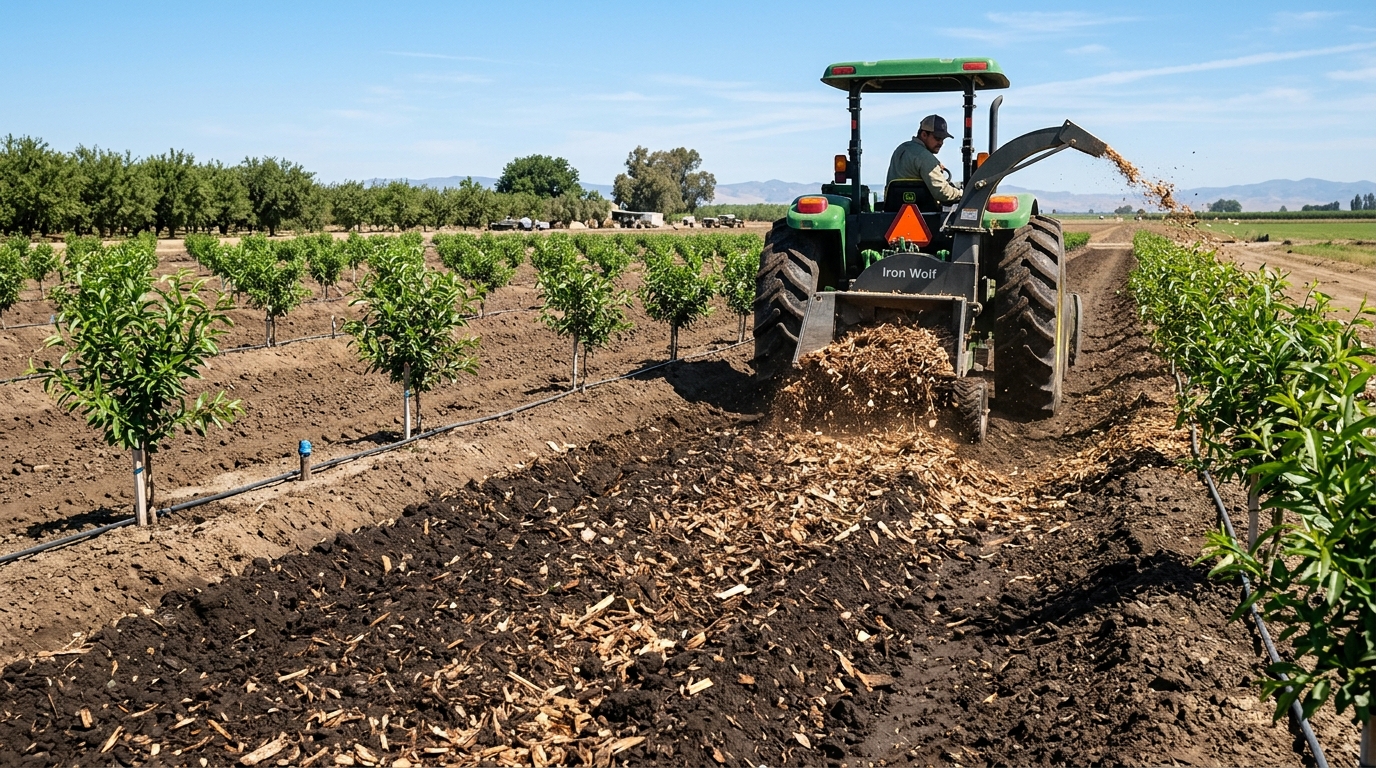
An almond tree lives a productive life of 25 years. Historically, retired trees were chipped and burned off-site. Today, Pacific Almonds utilizes Whole Orchard Recycling (WOR). Heavy machinery grinds mature trees into coarse organic chips, which are then incorporated 6 inches deep into the orchard floor. This returns up to 30 tons of nutrient-dense woody biomass per acre directly to the soil, building rich organic matter that feeds the next generation of trees.
Hulls for Cattle, Shells for Clean Energy
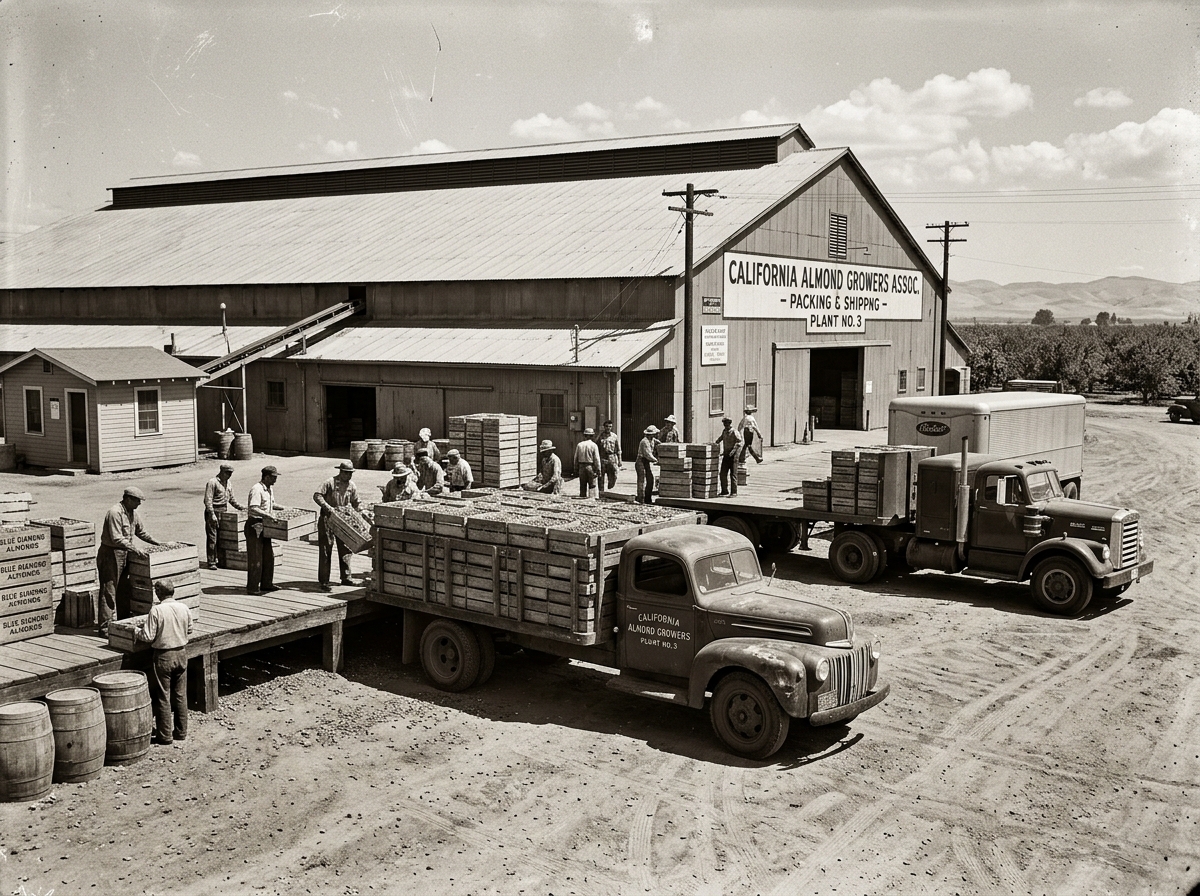
An almond kernel makes up only about 20% of the total harvest weight. The outer hull accounts for 50%, and the inner shell accounts for 30%. At Pacific Almonds, 100% of these co-products are captured and repurposed. Hulls are rich in digestible sugars and fiber, serving as a staple feed ingredient for California’s dairy cows that offsets water-intensive forage crops like alfalfa. Shells are utilized for dairy livestock bedding, soil amendments, and clean biomass energy cogeneration.
The Pacific Almonds Difference
As your trusted almond partner, we hold our environmental stewardship to the same uncompromising standards as our kernel quality. Our growers pledge zero-waste circular utilization, zero artificial additives, and USDA Grade-A certification. Every shipment delivers purity, freshness, and verified harvest-to-container traceability.
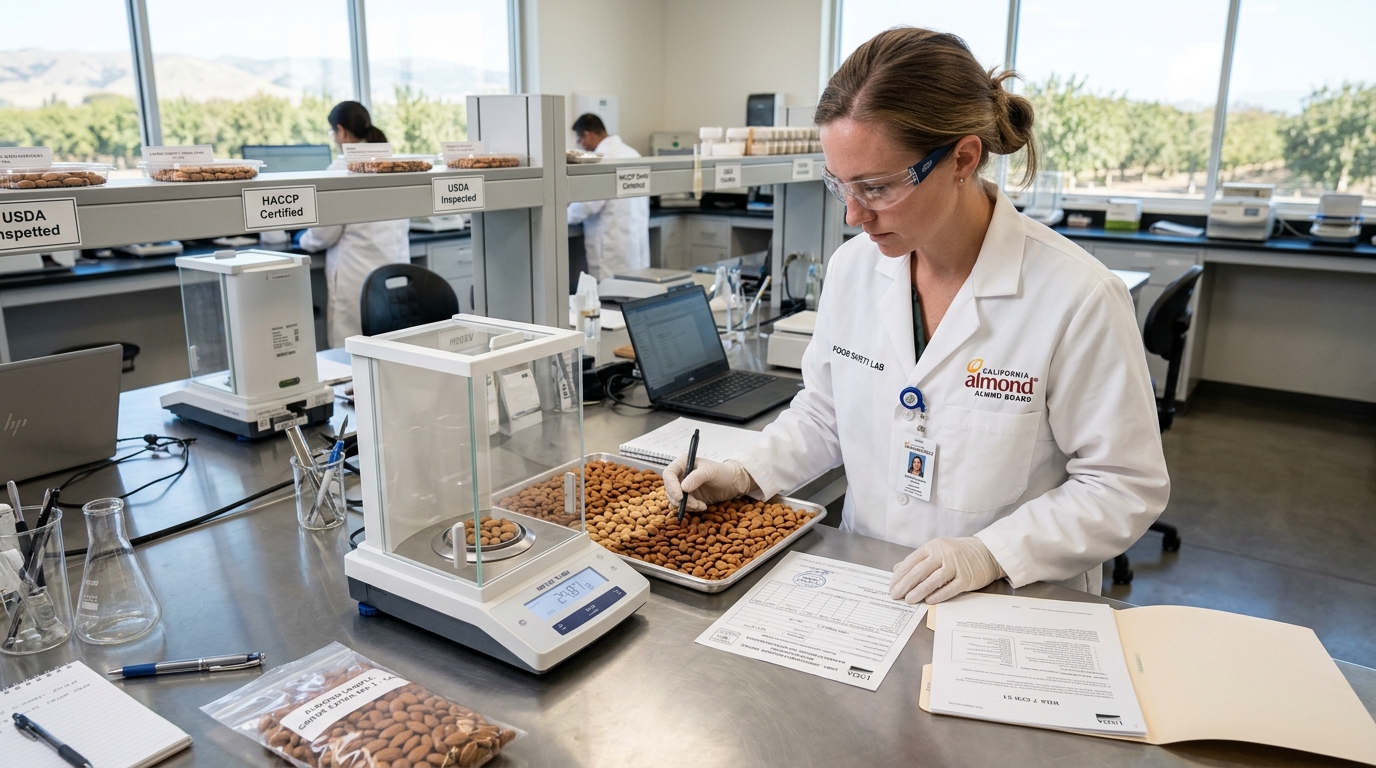
*Certified USDA Grade-A. Every export shipment includes full accredited lab CoA, phytosanitary clearance, and certified zero-waste bio-utilization documentation.
Verified Circular Bioeconomy Data
Multi-year USDA Agricultural Research Service trials proving Whole Orchard Recycling carbon storage.
Circular Agricultural Frameworks & Protocols
Verified closed-loop standards across all handling and harvest operations.
CDFA Healthy Soils Verification
Whole Orchard Recycling protocol approved under the California Department of Food and Agriculture Healthy Soils Initiative incentives.
CARB Air Quality Protocol
Complete transition away from agricultural open-burning, dramatically cutting PM2.5 and PM10 fine particulate emissions across the Central Valley.
Livestock Nutrition Certification
Almond hulls tested for feed safety, sugar concentration, and strict mold/aflatoxin limits before distribution to regional dairy operations.
Carbon Negative Potential
UC Davis life cycle modeling proves that when co-products are fully utilized and trees recycled, almond orchards operate with a net carbon-negative footprint.