Bee Friendly Certified Almond Farming California: Pollinator Care (2026)
Practicing bee friendly certified almond farming california protocols is essential for protecting honeybee health, boosting biodiversity, and ensuring bumper harvest yields across Central Valley orchards. Honeybees are responsible for pollinating every single almond kernel grown in California. By establishing multi-species blooming cover crops, clean hive water stations, and zero daytime fungicide applications, certified growers protect over 2.6 million bee colonies each February bloom. This 2026 agronomy report details pollinator certification standards, forage ecology, and ESG buyer transparency.
The Bloom Symbiosis: Why Almond Pollen Strengthens Honeybees
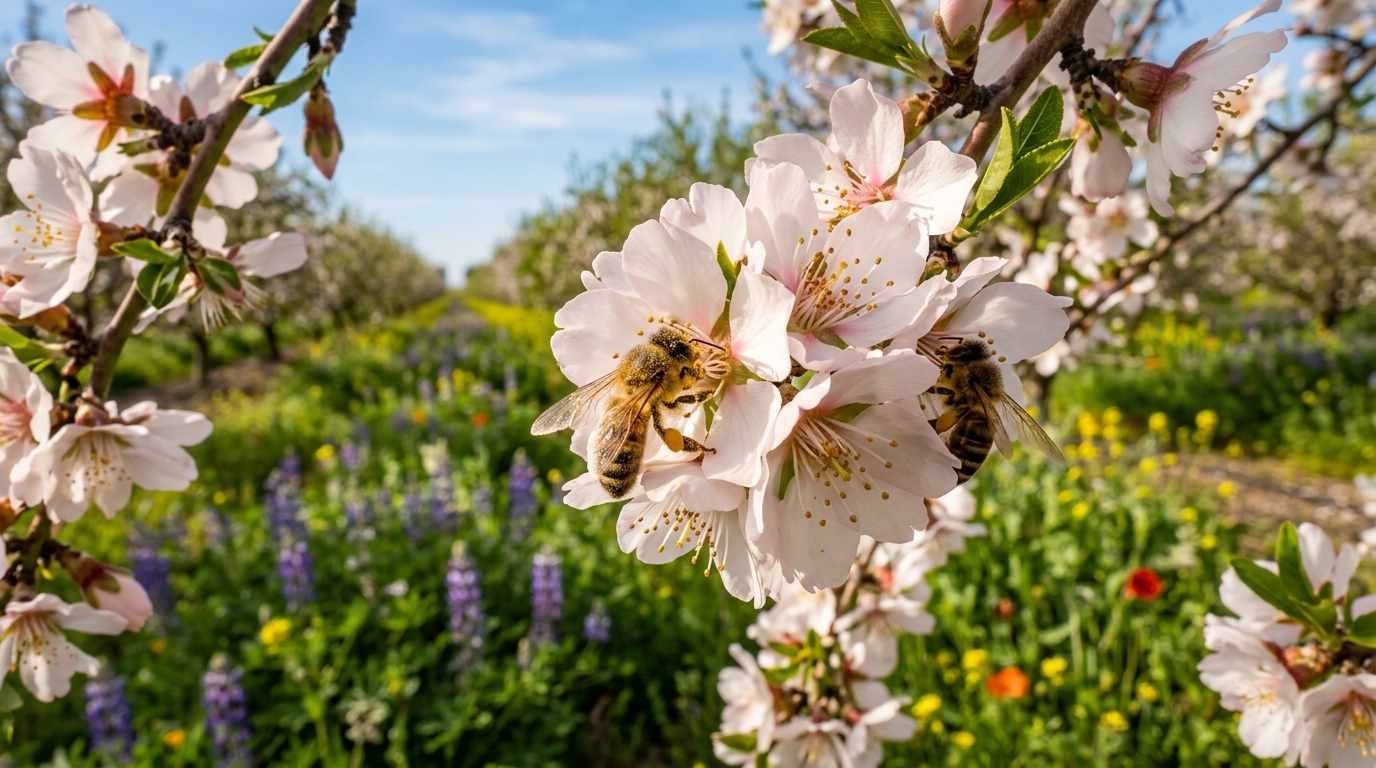
Every February, California's Central Valley hosts the largest single pollination event in world agriculture. Over 2.6 million honeybee hives—representing roughly two-thirds of all managed colonies in the United States—migrate to California to pollinate 100+ million blooming almond trees.
Almond blossoms are self-incompatible; they require honeybees to transfer pollen grains between alternating tree rows, such as Nonpareil and Carmel. Peer-reviewed entomological studies from UC Davis Department of Entomology demonstrate that almond pollen is extraordinarily nutritious, boasting 25% crude protein and rich amino acid profiles.
Arriving after cold winter dormancy, honeybee colonies feast on this abundant nutritional springboard. During the 3-week bloom window, hives experience rapid population growth, frequently departing California with 20% to 35% more worker bees to pollinate apples, cherries, and berries nationwide. Learn about our tree varieties in our Nonpareil vs Carmel guide.
Standards in Bee Friendly Certified Almond Farming California
Earning formal certification under Pollinator Partnership guidelines requires meeting strict criteria administered by the Bee Friendly Farming protocol. To qualify as a certified grower, Pacific Almonds implements four mandatory stewardship pillars:
Dedicated Habitat Forage (3%–5% of Acreage): Growers must preserve or plant permanent and seasonal blooming forage to support both managed honeybees and native solitary bees before and after tree blossom.
Integrated Pest Management (IPM): Growers must exhaust biological and mechanical controls prior to any chemical intervention, keeping chemical usage to absolute minimum thresholds.
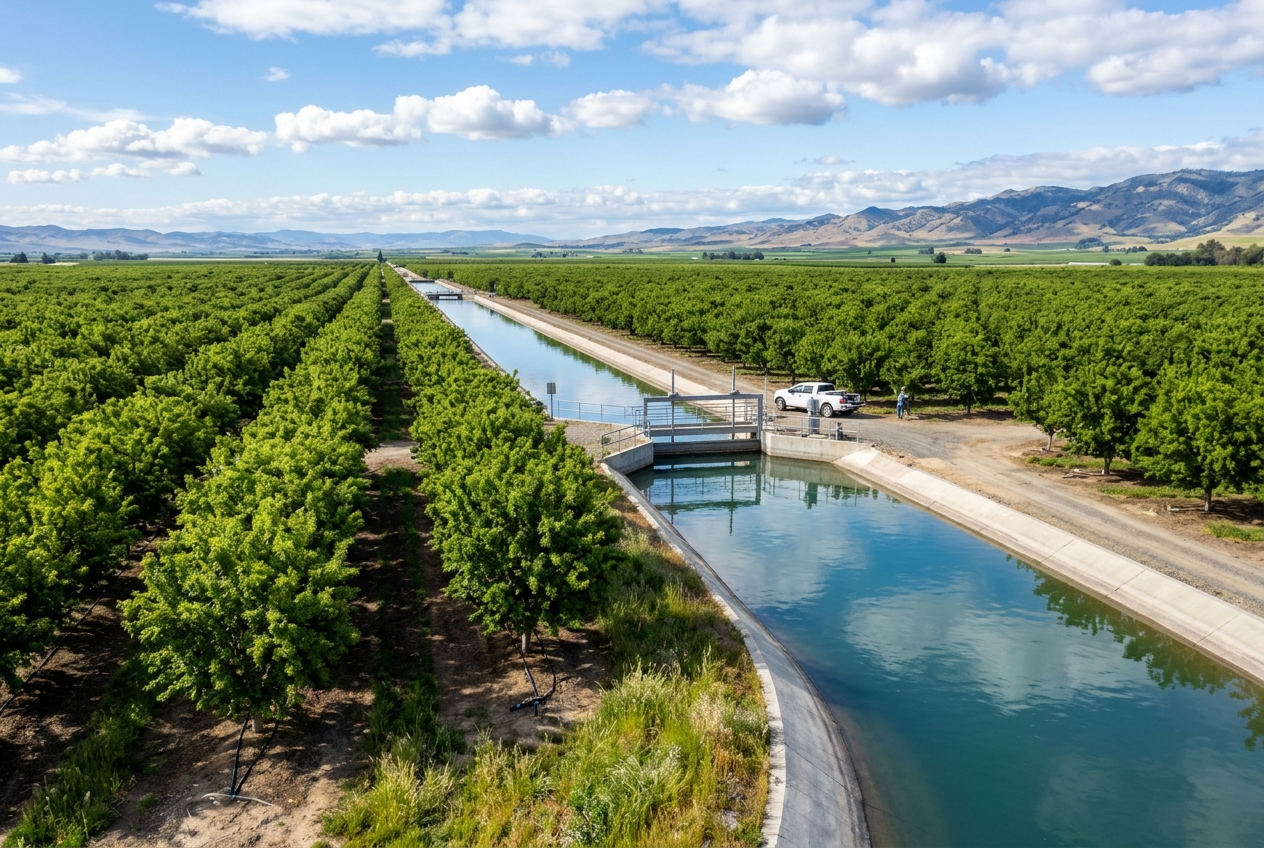
Reliable Clean Water Stations: Fresh, chemical-free hydration stations with floating landing pads are installed every quarter-mile, preventing bees from drinking irrigation runoff. Explore our orchard conservation practices on our sustainability portal.
100% Certified Acreage: Verified Pollinator Sanctuary
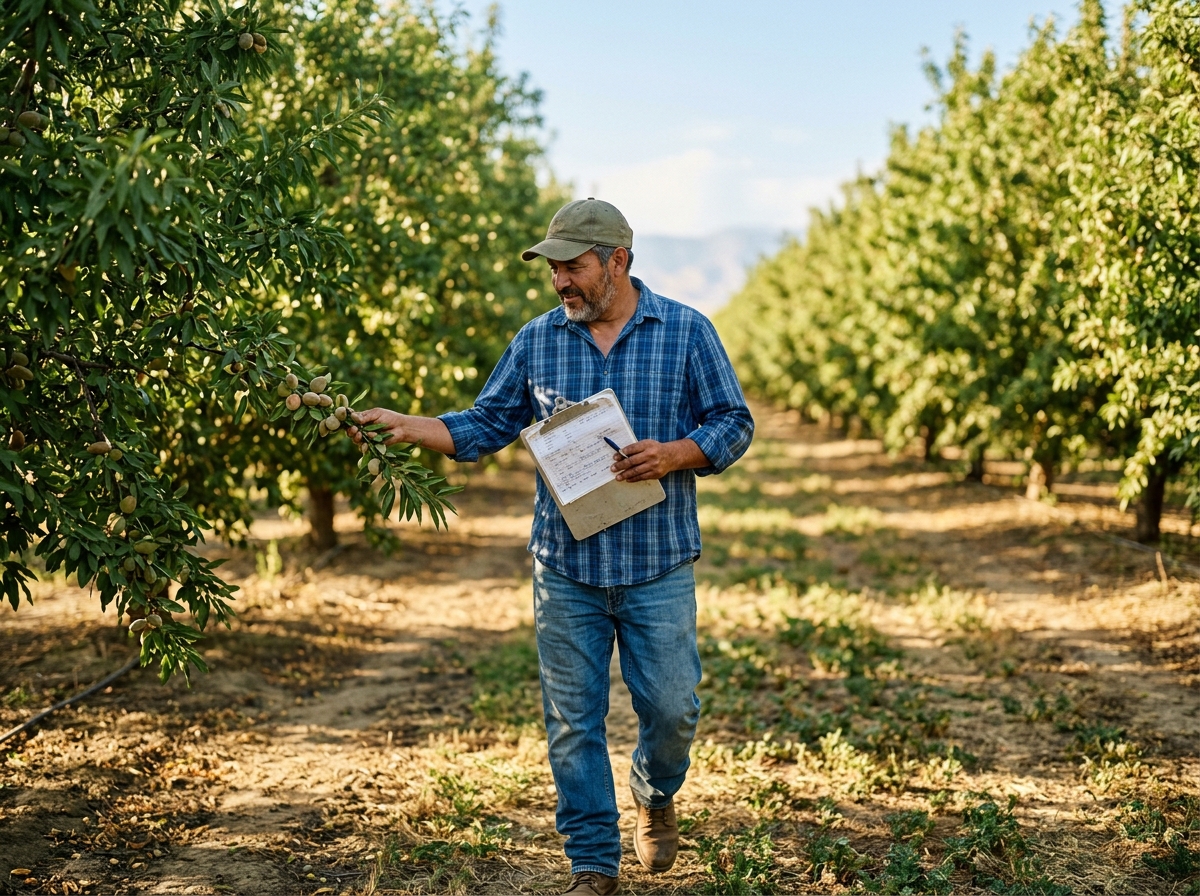
Every Pacific Almonds ranch in Kern County is certified Bee Friendly Farming, guaranteeing international retail buyers complete supply chain transparency and verifiable ESG compliance.
Audited under Pollinator Partnership Guidelines & Almond Board of California Bee Health BMPs.
Multi-Species Cover Crops: Mustard, Clover & Vetch Nutrition
Monoculture orchards provide food for honeybees only while almond trees are in active bloom. To provide continuous nutrition, we plant multi-species cover crops in autumn:
Brassica Mustard & Daikon Radish: Deep taproots break compacted hardpan soil layers, while bright yellow flowers bloom two weeks prior to almond bud break, welcoming early arriving bee colonies.
Legume Mix (Crimson Clover & Hairy Vetch): These legumes fix atmospheric nitrogen directly into the root zone, reducing synthetic fertilizer inputs while providing nectar after petals drop.
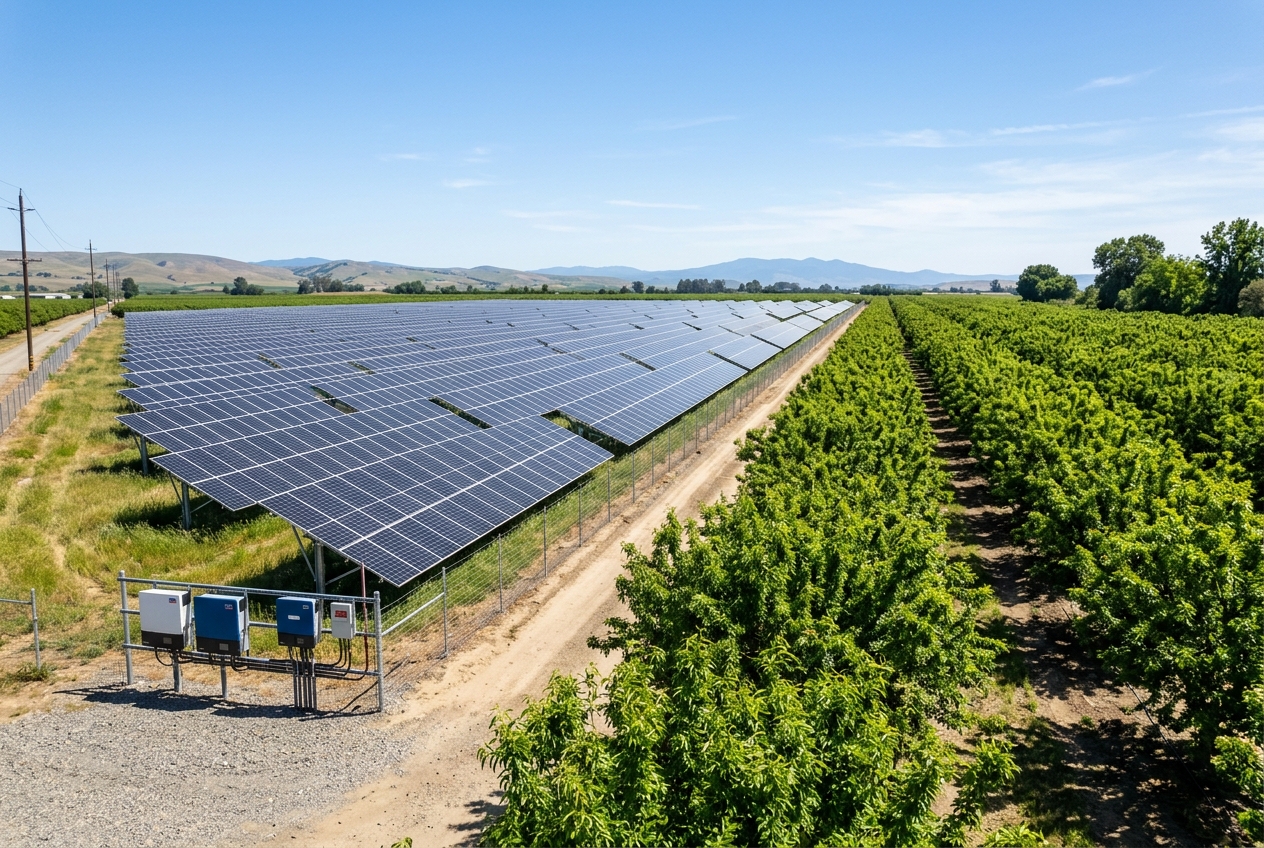
Soil Organic Carbon: Mowing and incorporating cover crop biomass into the topsoil increases soil moisture holding capacity by up to 20,000 gallons per acre. Discover how precision irrigation integrates with regenerative soils in our SGMA water compliance report.
Safe Orchard Chemistry: Zero Daytime Spraying Protocols
Protecting bee colonies requires rigorous coordination between beekeepers and farm managers. We enforce the Almond Board of California Honey Bee Best Management Practices (BMPs):
Strict Insecticide Ban: Zero insecticides are applied during bloom under any circumstances.
Nocturnal Fungicide Application: If damp bloom conditions require fungicide protection against blossom rot, applications occur exclusively at night or dusk after bees have returned to their hives. Spray tank mixes never combine fungicides with adjuvants that could harm bee larvae.
Hive Communication: Ranch managers maintain digital contact with beekeepers, sharing 48-hour advance notice of all field activities. Explore our wholesale bulk options on our products page.
Pollinator Health Metrics & ESG Certification Matrix
Quantifiable biodiversity metrics for corporate sustainability reporting and ESG supplier validation.
Audited and verified by the Pollinator Partnership across all contiguous Pacific Almonds acreage.
Multi-species cover crops provide diverse floral nectar and pollen before and after almond bloom.
All protective applications occur after dusk when honeybees have safely returned to their hives.
Complete traceability documentation for food brands requiring verified ESG pollinator metrics.
Bee Friendly Certification Audit Criteria
Key performance indicators verified during annual third-party pollinator audits.
| Audit Parameter | Standard Requirement | Pacific Almonds Protocol | Environmental Benefit |
|---|---|---|---|
| Cover Crop Forage | Minimum 3% of orchard acreage | 5.2% dedicated acreage | Continuous nectar and protein before/after bloom |
| Daytime Chemical Application | Zero insecticide spraying during bloom | Strict 100% nocturnal spray schedule | Zero direct chemical exposure to foraging bees |
| Clean Hydration Access | Permanent clean water stations | Filtered fresh water every 1/4 mile | Prevents honeybees drinking contaminated runoff |
| Beekeeper Notification | 24-hour advance communication | 48-hour digital notification system | Complete operational coordination with beekeepers |
| Soil Organic Matter | Encourage cover crop recycling | 100% biomass incorporation | Boosts soil moisture holding capacity by 20% |
Request ESG Sourcing Documentation
Connect with our sustainability team to access verified Bee Friendly Farming certificates, biodiversity reports, and supply chain audit data.
Sustainability Takeaways
Frequently Asked Questions: Bee Friendly Almond Farming
Essential information on pollinator stewardship and ecological certifications.
What is bee friendly certified almond farming California?
Bee Friendly Farming (BFF) is an independent certification protocol administered by the Pollinator Partnership. It requires growers to dedicate at least 3% to 5% of orchard acreage to blooming pollinator forage, maintain clean fresh water sources, and implement strict pest management that eliminates daytime spraying during bloom.
Does almond bloom strengthen honeybee colonies?
Yes. Research from UC Davis confirms that California almond pollen contains roughly 25% crude protein and balanced amino acids. Honeybee hives frequently gain 20% to 35% in worker population during the 3-week almond bloom, strengthening colonies before they migrate to other U.S. crops.
What cover crops are planted in bee-friendly almond orchards?
Growers plant multi-species cover crops including yellow mustard, daikon radish, clover, and purple vetch in orchard middles to provide diverse floral nutrition before, during, and after tree bloom.
What spray restrictions apply during the California almond bloom?
Certified growers adhere to strict Honey Bee Best Management Practices (BMPs), prohibiting all insecticide applications during bloom and applying any essential fungicides exclusively at dusk or nighttime when honeybees have safely returned to their hives.