
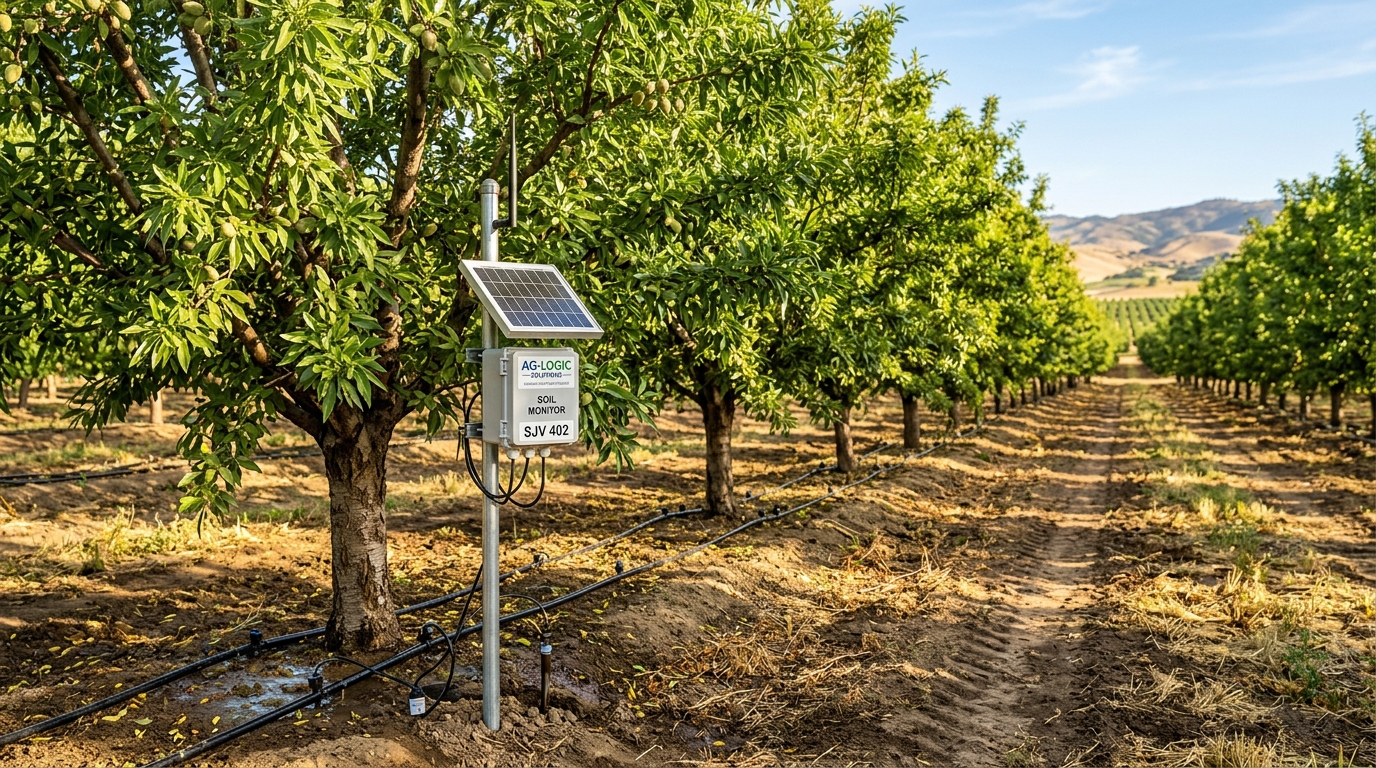
Sustainable Almond Farming California: SGMA Irrigation Guide (2026)
Pioneering sustainable almond farming california practices has transformed water stewardship across the San Joaquin Valley under the Sustainable Groundwater Management Act (SGMA). Facing multi-year droughts and groundwater extraction caps, modern growers have abandoned flood irrigation in favor of pressurized subterranean micro-drip systems, real-time soil moisture probes, and satellite evapotranspiration modeling. This complete 2026 technical report details how precision hydrology reduces water use by 33% per pound of almonds while regenerating regional sub-basins.
California Groundwater Revolution: Understanding SGMA Mandates
Enacted by the state legislature to halt chronic groundwater depletion, the Sustainable Groundwater Management Act (California SGMA Portal) mandates that all high-priority groundwater sub-basins achieve hydrological sustainability by 2040.
Local Groundwater Sustainability Agencies (GSAs) govern agricultural water extractions through metered telemetry:
Electronic Wellhead Telemetry: Every production well across Pacific Almonds acreage is equipped with cellular electromagnetic flow meters, recording pumping volume directly to regulatory databases.
Volumetric Allocations & Tiered Pricing: GSAs establish annual acre-foot extraction allocations. Over-pumping triggers severe financial penalties, creating an economic imperative to maximize "crop-per-drop" efficiency. Learn about our environmental commitments on our sustainability overview.
Sustainable Almond Farming California: Precision Subsurface Drip Technology
Leading the transition in sustainable almond farming california, growers have replaced open ditch flood irrigation with pressurized micro-irrigation:
Subsurface Drip Irrigation (SDI): Driplines buried 12 to 18 inches below ground deliver water and dissolved nutrients (fertigation) directly into the tree's active feeder root zone. Because water never touches the hot orchard soil surface, evaporation loss is reduced by over 90%.
Pressure-Compensating Emitters: Integrated self-flushing emitters deliver identical flow rates across undulating terrain and mile-long rows, ensuring uniform nut sizing across thousands of contiguous acres. Compare cultivar water needs in our guide on Nonpareil vs Carmel varieties.
33% Less Water Per Pound, 100% Micro-Irrigated Orchards
Through subsurface drip lines, precision leaf pressure chambers, and winter Flood-MAR aquifer recharge, Pacific Almonds leads California in sustainable groundwater management.
Source: Almond Board of California Water Stewardship Reports & UC Davis Center for Watershed Sciences.
Telemetry Probes, Soil Capacitance & Stem Water Potential
Irrigation scheduling is no longer based on visual estimation or calendar days. Instead, our agronomists rely on continuous plant-sensing technology:
Multi-Depth Capacitance Probes: Soil sensors installed at 12, 24, 36, and 48 inches record volumetric water content every fifteen minutes, transmitting moisture graphs via cellular networks.
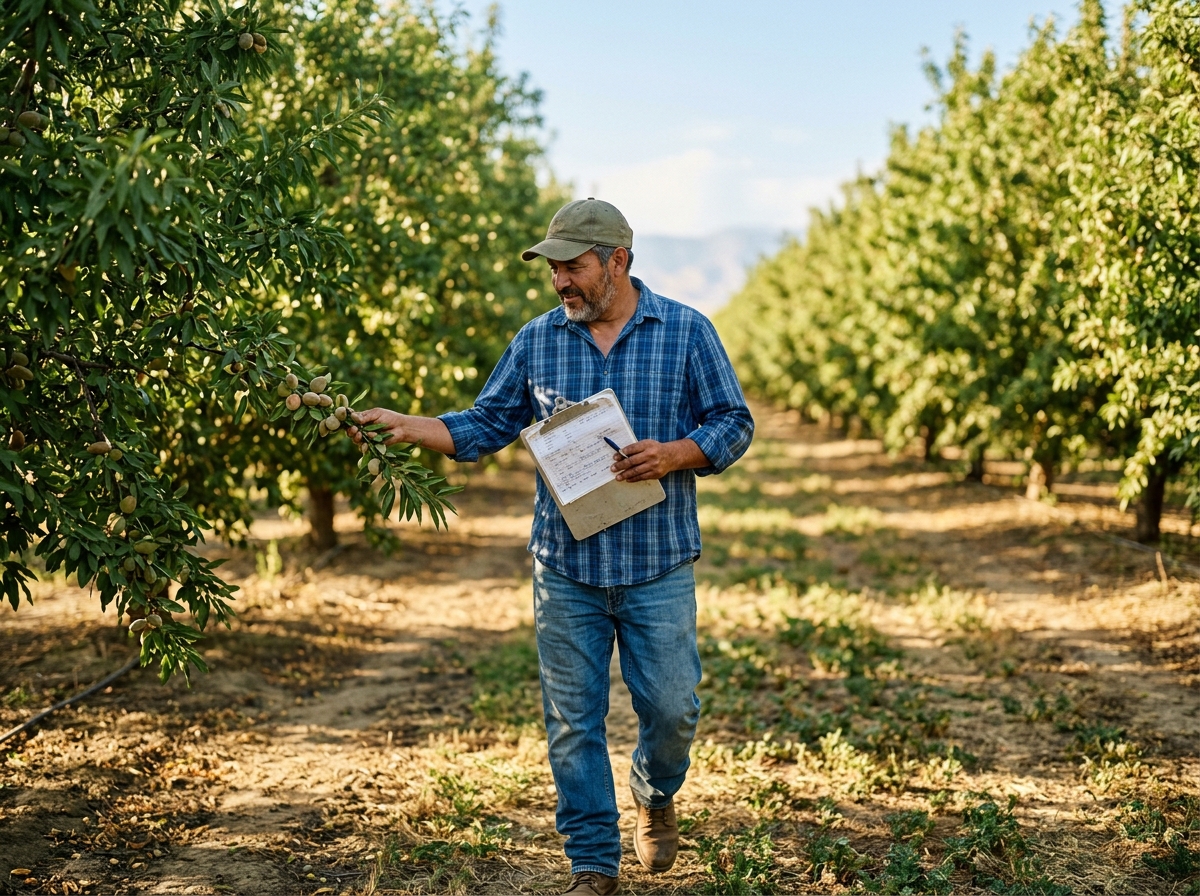
Midday Stem Water Potential (SWP): Using Scholander pressure chambers, agronomists measure the tension at which trees pull moisture from roots to leaves. By applying "regulated deficit irrigation" (RDI) during hull-split, we speed up dry-down, reduce hull rot, and conserve water. Explore our agricultural practices in our report on bee friendly farming protocols.
Winter Groundwater Banking: Flood-MAR Aquifer Recharge
Rather than merely conserving water, modern orchards actively replenish subterranean aquifers through Managed Aquifer Recharge (Flood-MAR):
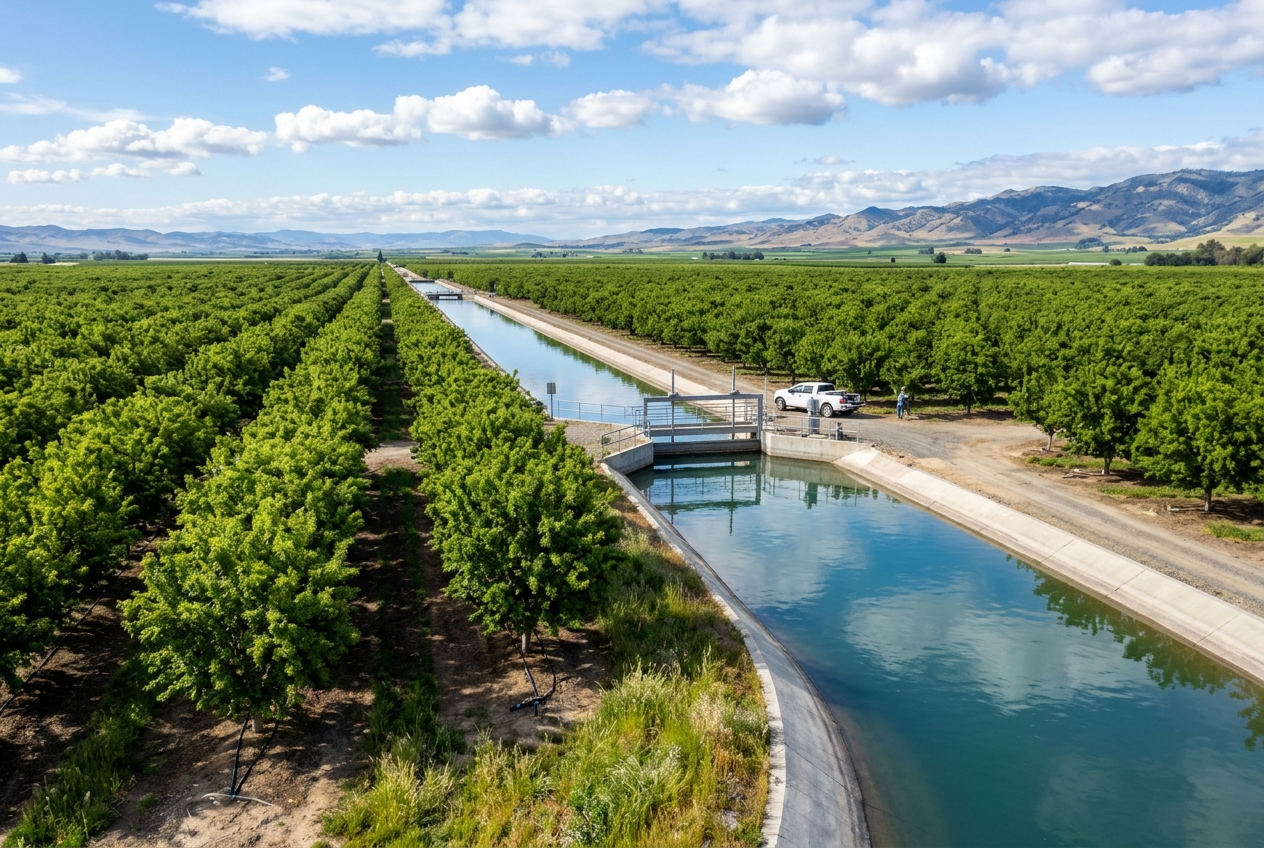
During wet winter atmospheric river events, excess snowpack runoff from the Sierra Nevada is diverted through regional canals onto dormant almond acreage. Almond trees tolerate wet root conditions during winter dormancy (December through January).
Deep alluvial loam soils allow millions of gallons of pristine winter water to filter through gravel substrata back into regional drinking water aquifers, creating substantial groundwater banking credits under local GSA sustainability plans. Learn more about co-product recycling in our zero-waste upcycling guide.
Water Efficiency Metrics & SGMA Compliance Matrix
Engineering parameters, sensor telemetry specifications, and groundwater conservation milestones.
Achieved across California orchards through micro-drip systems and precise agronomic scheduling.
Soil capacitance probes at 12 to 48 inches stream continuous volumetric moisture data to cloud agronomists.
Diverts winter floodwaters onto dormant orchards to replenish regional groundwater aquifers.
Every wellhead metered and audited under official Sustainable Groundwater Management Act guidelines.
Orchard Irrigation Technology Progression
Comparative water application efficiency by irrigation technology generation.
| Irrigation Technology | Water Application Efficiency | Evaporative Loss | Energy Requirements | SGMA Compliance Score |
|---|---|---|---|---|
| Traditional Flood / Furrow | 55% - 65% | High (25% - 35%) | Low (Gravity fed) | Poor (Phase-out underway) |
| Solid-Set Impact Sprinklers | 70% - 80% | Moderate (15% - 20%) | High pressure needed | Moderate |
| Micro-Sprinklers | 82% - 88% | Low (8% - 12%) | Moderate pressure | Compliant |
| Surface Drip Irrigation | 88% - 92% | Very Low (5% - 8%) | Low to Moderate | Fully Compliant |
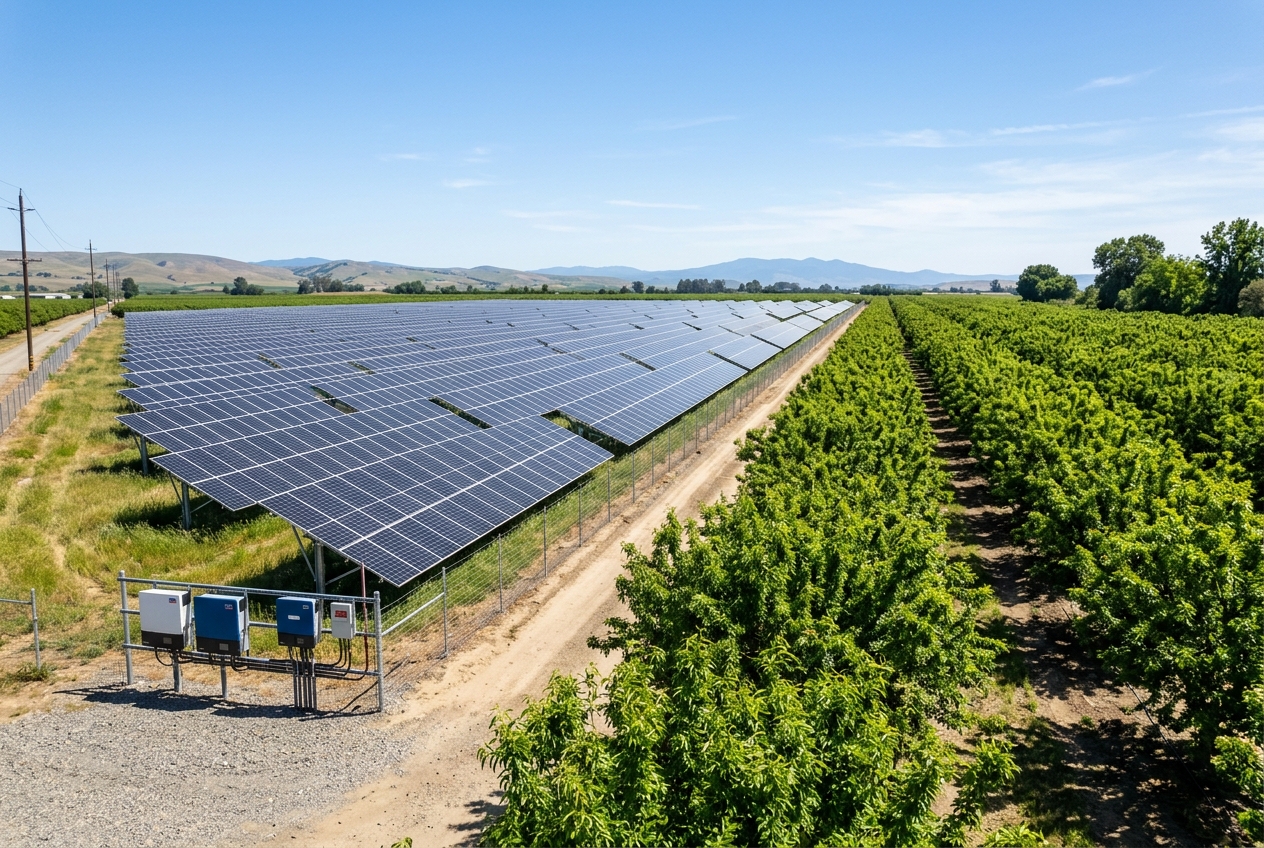
| Subsurface Drip (SDI) with Telemetry | 94% - 98% | Negligible (<2%) | Low (Solar-assisted) | Exceeds 2040 SGMA Target |
Inquire About Water-Certified Almond Supply
Connect with our agronomy team to request verified water footprint certifications, SGMA compliance audits, and sustainable supply contracts.
Hydrology Takeaways
Frequently Asked Questions: Sustainable Irrigation & SGMA
Essential facts regarding water stewardship, SGMA mandates, and precision irrigation technology.
What is the Sustainable Groundwater Management Act (SGMA) in California?
SGMA is California landmark legislation passed in 2014 requiring regional Groundwater Sustainability Agencies (GSAs) to halt aquifer overdraft and bring all critically overdrafted groundwater sub-basins into sustainable yield balance by 2040 through metered well allocations and groundwater recharge.
How much has water use declined in California almond farming?
According to the Almond Board of California and UC Davis, almond growers have reduced the amount of water needed to grow a pound of almonds by 33% since the 1990s, with a formal commitment to achieve an additional 20% efficiency gain by 2030 using micro-irrigation.
What technologies power precision drip irrigation in almond orchards?
Growers utilize pressure-compensating subsurface drip irrigation, multi-depth soil moisture capacitance probes, aerial infrared evapotranspiration mapping, and Scholander pressure chambers to apply water strictly when root zones experience physiological need.
What is on-farm Flood-MAR groundwater recharge?
Flood-MAR (Managed Aquifer Recharge) is a conservation technique where excess winter snowpack floodwaters are intentionally directed onto dormant almond orchards to percolate down through deep root loam soils, directly replenishing underground aquifers.